Why is the Moon so bright tonight?
Have you ever stepped outside and wondered, “Why is the Moon so bright tonight?” Whether you’re a seasoned stargazer or simply enjoying a peaceful evening, it’s hard not to notice when the Moon lights up the world around us.
Tonight, let’s explore the fascinating science and natural conditions that make our closest celestial neighbor shine so brilliantly in the night sky. Every so often, the Moon seems to dominate the night sky.
It rises slowly above the horizon, glowing far brighter than usual. A soft silver light illuminates the landscape, and the nearby stars fade into the background.
Such moments prompt a simple question: Why does the Moon seem so bright tonight?
The answer usually lies in a combination of natural factors involving the Moon’s position, the Sun’s illumination, and the clarity of Earth’s atmosphere. None of these conditions is unusual on its own, but when they occur together, the Moon can appear exceptionally bright.
Understanding these conditions not only explains the phenomenon but also reveals why the Moon has fascinated skywatchersfor thousands of years.
The Full Moon Effect
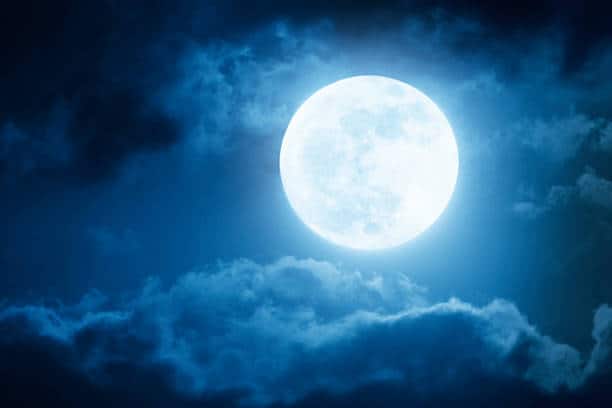
The most common reason the Moon appears especially bright is that it is near the full Moon.
A full moon occurs when the Earth sits between the Sun and the Moon. At this moment, the entire side of the Moon facing Earth is illuminated by sunlight.
Because the Moon reflects sunlight directly back toward us during this alignment, it becomes dramatically brighter than during other phases. Under clear skies, the full Moon can cast visible shadows and illuminate large areas of the landscape.
This is why full moon nights often feel noticeably brighter than others.
The Moon Is Closer to Earth
The Moon’s distance from Earth can also make it look brighter at times.
Instead of traveling in a perfect circle, the Moon follows a slightly elliptical orbit around Earth.
Consequently, there are times when it’s closer to our planet, and others when it is farther away.
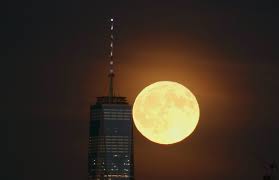
When a full moon occurs near the point where the Moon is closest to Earth—known as perigee—the Moon can appear larger and brighter. This event is sometimes called a “supermoon.”
While the difference is subtle, many observers find the Moon especially striking during these times.
Clear Atmospheric Conditions
The clearness of Earth’s atmosphere has a big impact on the Moon’s brightness.
Dust, moisture, and air pollution can scatter light, dimming the appearance of celestial objects. When the atmosphere is clean and dry, the Moon’s reflected sunlight reaches our eyes with very little interference.
On these nights, the Moon can appear exceptionally crisp and luminous against the dark sky.
Observers often find the Moon almost dazzling during these brief moments of atmospheric clarity.
The Moon’s Position in the Sky
The Moon’s place in the sky changes how bright it appears to us.
When the Moon rises near the horizon, it sometimes appears unusually large due to a visual phenomenon known as the Moon illusion. As it climbs higher, its brightness can become even more noticeable as the surrounding sky grows darker.
When the Moon reaches its highest point in the sky, there is less atmosphere between it and the observer. This can make the light appear stronger and more direct.
Seasonal Sky Conditions
Seasonal changes affect how bright the Moon looks at night.
During certain seasons, the Moon travels along a higher arc across the night sky. When this happens, the Moon remains visible for longer periods and shines more prominently against the darker sky.
Clear winter nights, in particular, often produce exceptionally bright lunar views because cold air contains less moisture.
These seasonal differences are subtle, but experienced observers quickly learn that some nights feel more luminous than others.
Why the Moon Sometimes Feels Extra Bright
A combination of these natural factors makes the Moon appear unusually bright.
This brightness is not due to a sudden change in the Moon itself, but to the alignment of Earth, Moon, and Sun, along with our viewing conditions.
For many people, these nights become memorable moments when the Moon seems to dominate the sky with a quiet brilliance.
A Good Night to Observe the Moon
Interestingly, the nights when the Moon appears brightest are not always the best nights for observing faint stars and galaxies. The Moon’s strong light can wash out many delicate objects in the night sky.
However, these nights are perfect opportunities to study the Moon itself.
Even a small pair of binoculars or a beginner telescope can reveal craters, mountain ranges, and deep valleys across the lunar surface.
If you are curious about what becomes visible as you start exploring the sky with a telescope, you may enjoy our guide explaining what you can see.

A Reminder to Look Up
Extra-bright Moon nights often spark wonder and invite us to look up.
That simple act of curiosity is how many people first become interested in astronomy.
Every generation of humanity has observed the Moon, and yet it still manages to surprise us when conditions align just right.
Sometimes the brightest object in the night sky is also the one that reminds us how much beauty can be found simply by stepping outside and paying attention.
Next time you catch yourself asking, “Why is the Moon so bright tonight?” remember that there’s a world of science—and a bit of magic—involved.
Whether due to its phase, position, or a crystal-clear sky, the Moon’s luminous presence reminds us to pause, look up, and appreciate the wonders overhead. So, enjoy the view and let your curiosity guide you to discover even more about our remarkable Moon.

Explore beginner telescopes, binoculars, and the best stargazing apps for beginners here