Where to Buy a Telescope
Who will help you if something isn’t right when your telescope arrives?
It’s a question worth asking before spending several hundred dollars on your first telescope.
When deciding where to buy a telescope, most people compare prices, delivery charges, and customer reviews. Those things matter. But the seller’s ability to help after delivery can matter just as much as the price.
A finder may need alignment. A reflector’s mirrors may need checking. A computerized telescope may require a power supply or an unfamiliar setup procedure.
These aren’t necessarily faults. They’re a normal part of learning to use astronomical equipment.
But if you’ve never owned a telescope, a simple adjustment can become an evening of frustration.
You’re not just buying a telescope. You’re choosing who you can turn to when you need help.
1. What a Specialist Telescope Dealer Gives You
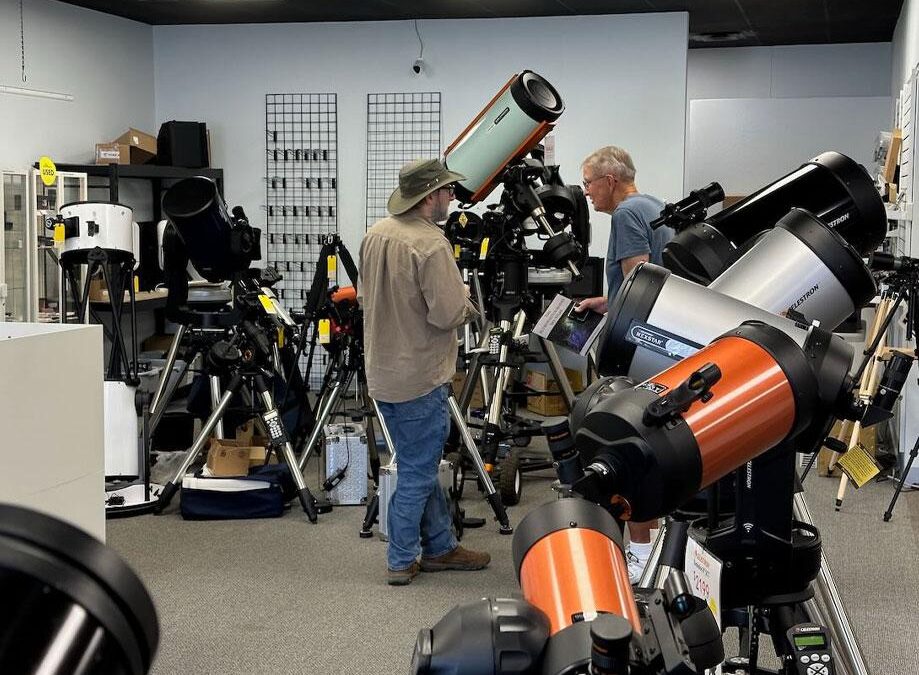
A knowledgeable astronomy retailer should understand the equipment it sells.
Before you buy, a specialist can explain whether a particular telescope suits your observing goals.
Someone who wants to see the Moon, Jupiter, and Saturn from a backyard needs different advice from someone planning long-exposure astrophotography.
A good retailer should also explain practical details that aren’t always obvious from a product description.
How heavy is the telescope? Will you need a sturdy table? Does the mount track objects automatically? Are the included eyepieces enough to get started?
Those answers can prevent expensive mistakes.
Support After the Sale
Imagine your new telescope has arrived.
You’ve assembled it, but the finder won’t point in the same direction as the main telescope.
Or the image seems blurry, despite your attempts to focus.
Or the computerized mount won’t locate the object you’ve selected.
A specialist retailer may guide you through the setup procedure, explain what to check, or help determine whether a component is defective.
That support is one of the strongest reasons to choose a reputable astronomy dealer.
Is the Telescope Actually in Stock?
Before ordering, confirm that the telescope is physically available.
A listing may show a product that’s backordered or awaiting another shipment from the manufacturer.
Check the expected dispatch date rather than relying solely on an estimated delivery date.
For a large Dobsonian telescope, also check whether the optical tube and base will arrive in separate boxes.
2. Buying Through an Online Marketplace
Buying through an online marketplace isn’t automatically a mistake.
Established astronomy retailers sometimes sell through marketplaces as well as their own websites.
The important distinction is between the platform and the actual seller.
Before purchasing, confirm who supplies the equipment, handles returns, and provides technical support.
A marketplace may offer buyer protection if an item never arrives or isn’t as described.
That doesn’t necessarily mean someone will explain how to align your finder or troubleshoot an electronic mount.
Check whether the seller is authorized to sell the brand, particularly when manufacturer warranty coverage matters.
If the seller is established, the listing is accurate, and the policies are clear, a marketplace purchase may be perfectly reasonable.
If you cannot establish who is responsible after the sale, consider another seller.
3. Six Warning Signs in an Online Telescope Listing
A low price isn’t automatically suspicious.
Retailers run promotions and clear older inventory. But certain warning signs deserve closer attention.
1. Enormous Magnification Claims
A telescope advertised primarily on its supposed 600× magnification deserves scrutiny.
Useful magnification depends on aperture, optical quality, mount stability, and atmospheric conditions.
A large number printed on a box doesn’t guarantee a good view.
2. Stock Photographs on a Used Listing
If you’re buying second-hand, ask for photographs of the actual telescope.
You need to see the instrument’s condition, not the manufacturer’s advertising image.
Stock photographs are normal for new products. They’re much less useful when evaluating used equipment.
3. A Price Far Below Comparable Listings
A substantial discount may be genuine.
But check the model number, condition, and included accessories before assuming you’ve found a bargain.
A used telescope without its original eyepieces or finder isn’t equivalent to a complete new package.
4. No Identifiable Seller
Look for a genuine business name, contact information, and a clear returns procedure.
A seller who cannot explain how they’ll handle damaged or defective equipment creates unnecessary risk.
5. Pressure to Pay Outside the Checkout System
Be cautious if a seller asks you to abandon a protected payment process and transfer money directly.
Use a payment method that offers appropriate buyer protection.
6. An Impressive-Looking Accessory Bundle
Some packages include cases filled with inexpensive eyepieces, filters, and adapters.
More accessories don’t necessarily mean better equipment.
A stable mount and sound optical design are generally more valuable than a large collection of accessories you may never use.
Before paying extra for a bundle, check which accessories come with the telescope, and whether the additional items solve a problem you’ll actually encounter.
If you’re still uncertain about the telescope itself, rather than the seller, read The Hobby Killer. It explains the common equipment mistakes that can spoil a beginner’s experience.
4. Buying a Used Telescope: What to Inspect
A second-hand telescope can offer excellent value.
Many amateur astronomers care for their equipment and sell perfectly good instruments when upgrading.
A manual Dobsonian is often a sensible used purchase because it has relatively few electronic components.
But condition matters.
Whenever possible, inspect the telescope in daylight.
Check the Optics
Look at the primary mirror or objective lens in normal ambient light.
A little dust is common and isn’t necessarily a problem.
Significant scratches, chips, coating deterioration, or heavy haze deserve closer examination.
Don’t touch the optical surfaces or attempt to clean them during an inspection.
Examine the Tube
Look for dents, damaged fittings, and signs of impact.
Minor cosmetic marks may be harmless, but structural damage is more concerning.
Test the Focuser
Insert an eyepiece and move the focuser through its normal range.
It should operate smoothly without excessive looseness or binding.
Move the Mount
A Dobsonian should move smoothly up, down, and sideways without excessive wobble or sticking.
For a tripod-mounted telescope, check the legs, locks, and adjustment mechanisms.
Confirm Every Included Accessory
Ask the seller to lay out everything included in the purchase.
Check the eyepieces, finder, adapters, mounting hardware, and any power accessories.
A used Apertura AD6 without its supplied 9 mm eyepiece has lost the eyepiece that provides approximately 133× magnification, a useful option for observing Saturn.
That doesn’t make the telescope unusable.
But replacing the eyepiece costs money.
Find the price of a comparable replacement and deduct that amount from what you’re prepared to offer.
Apply the same principle to missing finders, adapters, and other essential components.
Be Especially Careful With Electronics
A computerized telescope deserves a more thorough demonstration.
Ask the seller to show that the mount powers on, moves correctly, and responds to its hand controller.
Check the battery compartment, electrical connections, and required software.
A computerized telescope with a faulty controller can become an expensive repair.
I would avoid buying one privately without seeing it operate or understanding how to resolve a failure.
5. Consider Inspected Pre-Owned Equipment
Private second-hand purchases aren’t the only option.
Some specialist astronomy retailers sell inspected used, open-box, or refurbished equipment.
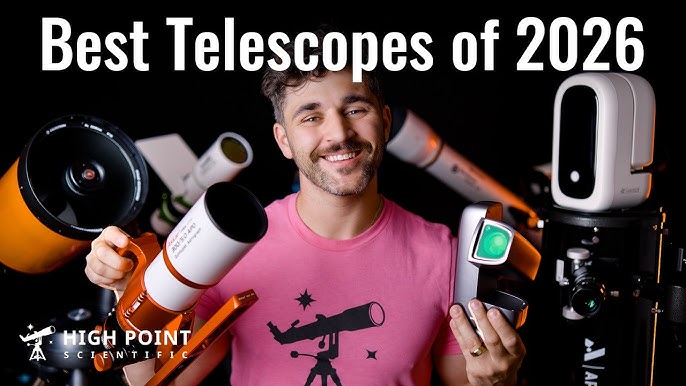
High Point Scientific publishes condition ratings for its pre-owned telescopes and offers warranty coverage on qualifying used equipment.
Warranty arrangements depend on the item’s classification, so check the warranty shown on the individual listing before ordering.
If you want to save money without taking on all the uncertainty of a private sale, inspected used equipment is worth considering.
6. Check What’s Actually Included in the Box
Two listings may show the same telescope but include different accessories.
That makes the contents list just as important as the headline price.
Apertura AD8
The standard AD8 package includes a 30 mm 2-inch eyepiece, a 9 mm 1.25-inch eyepiece, an 8×50 right-angle finder, a laser collimator, a Moon filter, and a primary-mirror cooling fan.
The fan requires eight AA batteries, which aren’t included.
With the telescope’s 1,200 mm focal length, the supplied eyepieces provide approximately 40× and 133× magnification.
Apertura AD6
The standard AD6 package includes a 25 mm Plössl eyepiece, a 9 mm Plössl eyepiece, and a 6×30 right-angle finder.
It also includes the Dobsonian base, focuser, adapter, and other listed assembly components.
The 25 mm eyepiece provides approximately 48× magnification, while the 9 mm provides approximately 133×.
These are useful starting magnifications for different observing targets.
Celestron NexStar 5SE
The standard NexStar 5SE includes a 25 mm eyepiece, providing approximately 50× magnification with its 1,250 mm focal length.
The computerized mount can operate using eight AA batteries, which aren’t included in the standard package.
An appropriate external power supply is another option.
For higher planetary magnification, you’ll probably want an additional eyepiece.
Always compare the exact package contents before ordering.
 7. Why I Refer Readers to High Point Scientific

High Point Scientific is a specialist US astronomy retailer offering telescopes, accessories, and technical support.
Its product advisers can help with equipment selection, and the retailer provides product-specific information and support resources.
High Point Scientific is the exclusive distributor of Apertura products, including the AD6 and AD8 telescopes.
That is particularly useful when questions arise about an Apertura telescope’s setup, components, or warranty.
For someone buying a first telescope, specialist product knowledge, clear specifications, and a clear support team matter.
High Point isn’t the only reputable astronomy retailer, and I encourage readers to compare suitable sellers.
But it’s a sensible place to begin when considering the models below.
8. What Does a Fair Telescope Price Look Like?
Once you’ve checked the seller, condition, and package contents, you can compare prices meaningfully.
These are three beginner telescopes worth considering.
 Apertura AD8: $699.95
My top pick for beginners who want an 8-inch Dobsonian and can comfortably manage its size and weight.
Its manual mount is straightforward, and the standard package includes useful accessories for getting started.
Apertura AD6: $499.95
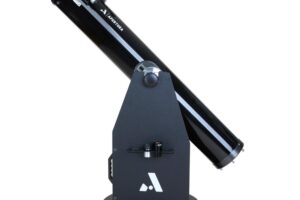
A smaller, less expensive 6-inch Dobsonian for beginners who prefer a more manageable instrument.
It offers rewarding views of the Moon, planets, and many brighter deep-sky objects.
Celestron NexStar 5SE: Check the Current Price
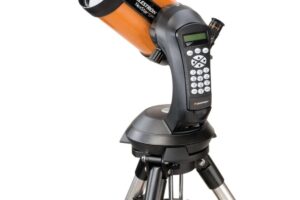
A compact computerized telescope designed to locate and track celestial objects after the required setup and alignment.
It’s an option for someone who values automated object finding and is comfortable managing electronic controls and power requirements.
Prices in US dollars. The AD8 and AD6 figures are regular reference prices, not guaranteed checkout prices. Retailers run promotions, so check the live listing for the current selling price.
Compare the Current Listings
Affiliate disclosure: I earn a small commission if you buy through these links, at no extra cost to you. Please compare the full package, price, and retailer policies before ordering.
- View the Apertura AD8 at High Point Scientific
- View the Apertura AD6 at High Point Scientific
- View the Celestron NexStar 5SE at High Point Scientific.
A lower advertised price isn’t necessarily a better deal if you’re giving up essential accessories, warranty coverage, or support.
Compare the complete purchase, not just the number beside the Buy button.
If you’re still deciding which telescope is right for you, visit Start Your Stargazing Journey for more guidance on choosing your first telescope.
9. Read the Return Policy Before You Pay
Don’t assume a 30-day return policy means you can use a telescope for several weeks and receive a full refund if you change your mind.
High Point Scientific publishes a 30-day return window beginning when the customer receives the equipment.
For domestic returns, products that are no longer factory-sealed may incur a minimum 10% restocking fee.
Return shipping charges and other conditions may also apply.
Damaged or defective products follow a separate inspection and resolution procedure.
Manufacturer warranty arrangements vary by brand and product.
If you’re ordering internationally, also check shipping costs, customs charges, and warranty eligibility.
Read the actual policy before paying, not after a problem develops.
10. Five Questions Before You Click Buy
You don’t need to become an expert in telescope retailing.
You need answers to five practical questions.
- Am I buying the exact model and package I intended? Check the model number, aperture, mount, and accessories.
- Is it actually in stock? Confirm the expected dispatch date.
- Who will help if something doesn’t work? Look for genuine technical support and contact arrangements.
- What happens if it arrives damaged or isn’t suitable? Read the return and warranty conditions.
- What is the complete cost? Include shipping, taxes, power supplies, and any necessary accessories.
If the answers aren’t clear, keep looking.
Not Ready to Buy? Start With a Free Guide
There’s no reason to rush a telescope purchase.
If you’re still comparing models, you can begin learning the night sky without spending anything.
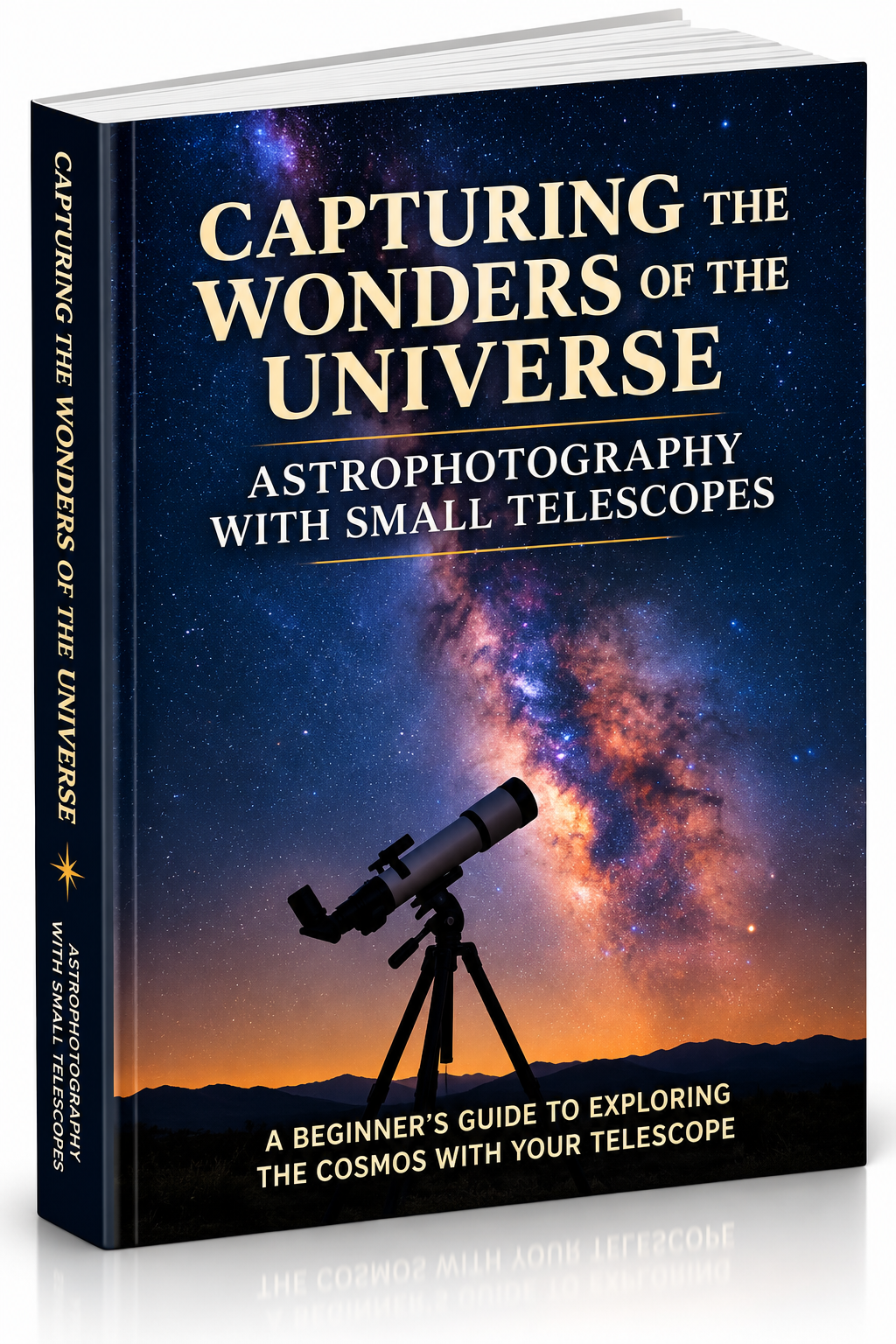
My free beginner’s guide helps you prepare for your first observing experience and get familiar with the night sky before investing in equipment.
It’s the kind of guidance I would have welcomed before my first night out, and it costs nothing.
The Right Seller Makes the First Night Easier
A telescope can provide years of rewarding observing, but getting started sometimes involves a few questions.
Choose a seller who can answer them.
The lowest price may save you money today. Reliable support may save you the frustration that stops you from using the telescope tomorrow.
Buy from someone who can help you use it, not merely someone who can send you a box.
Already bought your telescope? Continue with How to Use Your New Telescope on the First Night.
Explore beginner telescopes,binoculars and best stargazing apps for beginners here:
Affiliate disclosure: White Star Outdoors may earn a commission from qualifying purchases made through retailer links, at no additional cost to you. Recommendations are based on practical suitability, equipment specifications, and beginner astronomers’ needs.