
One of the first questions beginners ask when exploring astronomy is simple: What can you see with a telescope, including the Moon, planets, star clusters, and distant galaxies?
However, before choosing a telescope, it helps to understand what you can see in the night sky tonight, because many of the most fascinating objects are already visible with the naked eye.
What can you actually see through a telescope?
Many people imagine the colourful images often seen from NASA or space telescopes. Those images are real, but they are created using long exposures and specialised equipment.
When you look through a telescope with your own eyes, the experience is different.
The views are usually more subtle, quieter, and more natural. But seeing objects in space with your own eyes can be an unforgettable experience.
Even a small beginner telescope can reveal remarkable sights in the night sky.
Let’s explore what you can realistically expect to see as we move from the Moon, our closest neighbor, outwards to more distant wonders.
The Moon: The Best First Telescope Target
The Moon is usually the first object beginners observe with a telescope, and for good reason.
Even a small telescope shows incredible detail.
You can clearly see:
- craters created by ancient impacts
- mountain ranges on the lunar surface
- shadow lines dividing day and night on the Moon
One of the most beautiful moments occurs when the Moon is not full. The line between light and darkness — called the terminator — creates dramatic shadows across the surface, making craters and mountains stand out clearly.
After exploring the Moon’s wonders, you might wonder what other planets are visible.
Jupiter: A Giant Planet With Visible Moons
Jupiter is one of the most rewarding planets to observe through a telescope.
With even modest equipment, you can often see:
- Two dark cloud bands across the planet
- The four large Galilean moons discovered by Galileo
- The Moon’s changing position night after night
Watching those tiny moons shift around Jupiter is a powerful reminder that you are observing a miniature solar system in motion.
Saturn: The Famous Ringed Planet
Saturn is often the moment when beginners truly fall in love with astronomy.
Through a telescope, Saturn is small but unmistakable.
You can usually see:
- the bright ring system
- the dark gap between the planet and its rings
- occasionally one or two moons
With a sense of awe from Saturn, let’s turn our attention to other fascinating planets like Mars.
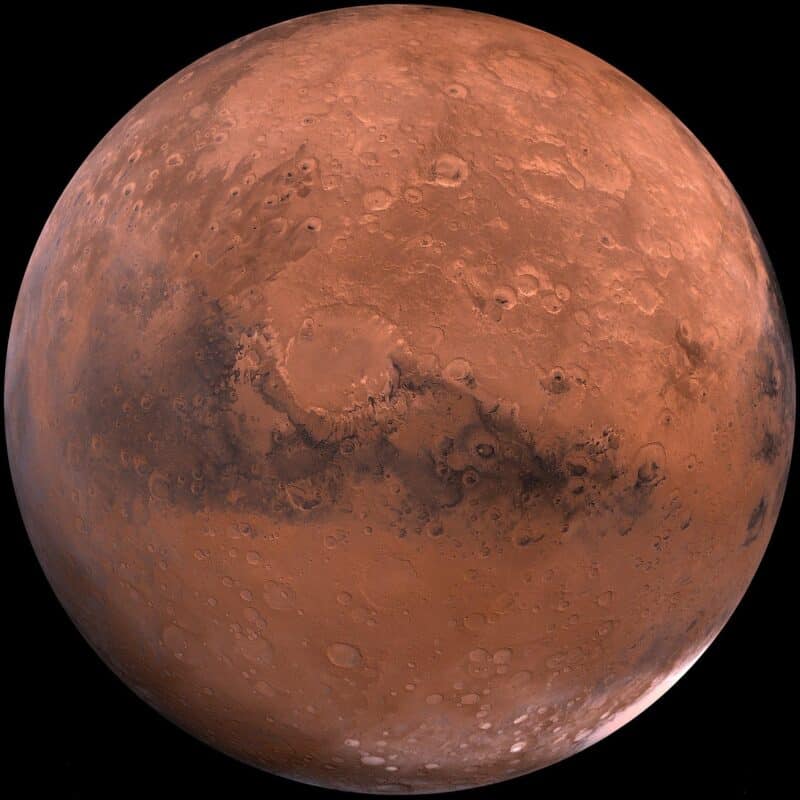
Mars Planet
Mars: The Red Planet
Mars can be seen when it is closest to Earth.
Depending on conditions and telescope size, observers may see:
- a small orange disk
- darker surface markings
- polar ice caps during certain seasons
Mars requires patience because its details are subtle, yet it remains a fascinating world to observe.
Venus: Phases Like the Moon
Venus is extremely bright in the sky and surprisingly interesting through a telescope.
Instead of surface details, observers see phases, similar to those of the Moon.
Venus appears as:
- a crescent shape
- a half phase
- sometimes a nearly full disk
This happens because Venus orbits the Sun inside Earth’s orbit.

Andromeda Galaxy
Deep Sky Objects: Beyond the Solar System
You can observe objects far beyond our solar system.
These are often called deep sky objects.
The Orion Nebula
The Orion Nebula is one of the most famous objects in the night sky.
Through a telescope, it appears as a soft, glowing cloud where new stars are forming.
Beyond nebulae, star clusters are another captivating group of objects you can enjoy.
Star Clusters
Star clusters are among the most beautiful targets for telescopes.
Two famous examples include:
- The Pleiades (Seven Sisters)
- The Beehive Cluster
After viewing clusters, galaxies offer a final, stunning showcase of what telescopes reveal.
The Andromeda Galaxy
The Andromeda Galaxy is the closest large galaxy to our own Milky Way.
Through a telescope, it appears as a faint oval glow stretching across the sky.
What makes it extraordinary is the scale.
While these distant objects are impressive, beginners need to know what to expect.
What Beginners Are Often Surprised By
It helps to set realistic expectations.
When observing through a telescope:
- Objects appear smaller than in photographs.
- Colours are usually faint.
- Detail improves with practice and darker skies.
This is completely normal.
Astronomy is not about bright images. It is about learning to see more over time.
Now that you know what you can observe, consider how to make the most of your telescope.
How to See More in the Night Sky
Three simple factors dramatically improve what you see through a telescope.
Darker Skies
Light pollution hides many objects. Dark skies reveal far more detail.
Patience at the Eyepiece
Spending time observing allows your eyes to adapt and notice subtle features.
Learning the Night Sky
Understanding constellations helps you locate fascinating objects much more easily.
A Simple Way to Begin Stargazing
To start exploring astronomy, look up and begin observing the night sky.
Begin with simple equipment and learn how the sky moves before investing in advanced gear.
Learn about the basic tools and essentials here: ➡ Stargazing Essentials.
If buying equipment, this guide may help: ➡ Choosing Your First Telescope.

Explore beginner telescopes, binoculars, and the best stargazing apps for beginners here: