
What Can You See in the Night Sky Tonight?
What can you see in the night sky tonight? A beginner-friendly guide to planets, constellations, the Moon, and deep sky objects.
For many beginners, the most exciting moment in astronomy happens when they step outside, look up, and wonder what they are actually seeing in the sky.
The night sky may look overwhelming at first. Thousands of stars appear scattered across the darkness, and it can be difficult to know where to begin.
The good news is that you do not need expensive equipment or years of experience to start recognising objects above you.
With a little patience and a few simple guidelines, beginners can quickly learn what to look for and what makes each object unique.
If you are wondering what you can see in the night sky tonight, several fascinating sights are often visible even from suburban areas.
Let’s explore the most common sights beginners can see in the night sky tonight.
What Can You See in the Night Sky Tonight as a Beginner?
1. The Moon
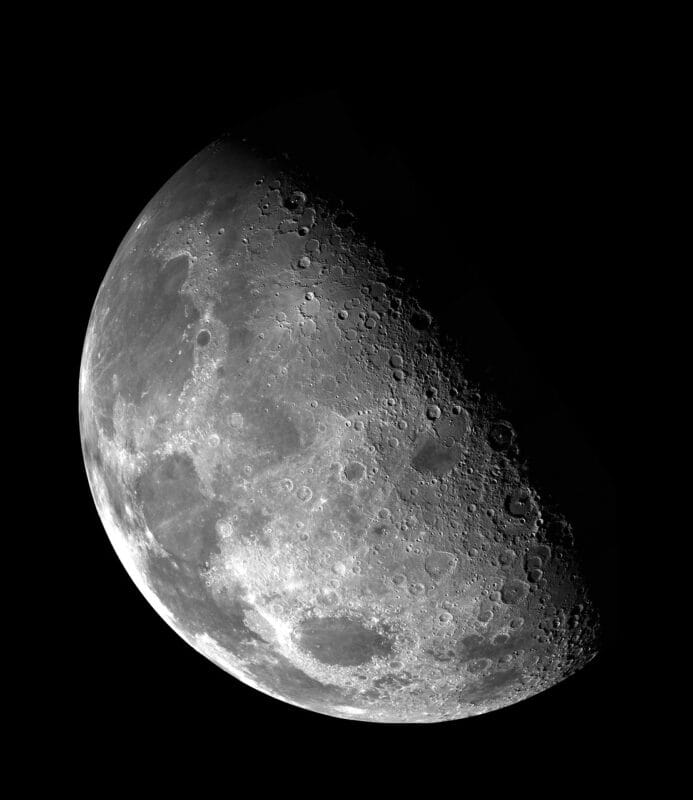
The Moon is often the first object that draws people into astronomy.
It is bright, easy to find, and constantly changing throughout the month. Each night, the Moon moves through different phases, revealing new details along its surface.
Even without a telescope, you can see:
Dark lunar plains known as maria.
Bright crater rays.
The changing shape of the lunar phases.
With a small beginner telescope, the Moon becomes even more impressive. Craters, mountain ranges, and shadows along the lunar terminator become clearly visible.
Because of its brightness and detail, the Moon is one of the most rewarding objects for beginner stargazers.
If you are curious why it sometimes appears unusually bright, read our guide Why Is the Moon So Bright Tonight.
2. Bright Planets
Another exciting answer to the question of what you can see in the night sky tonight is the planets.
Several planets can often be seen with the naked eye, appearing brighter and steadier than most stars.
Common planets beginners spot include:
Venus – extremely bright, often visible shortly after sunset or before sunrise
Jupiter – bright and steady, sometimes visible for many months
Saturn – slightly dimmer but still noticeable in dark skies
Mars – reddish and distinctive when visible
Unlike stars, planets do not twinkle as much because they appear as small disks rather than distant points of light.
If you would like to learn how to recognise them more easily, read our guide on How to Identify Planets in the Night Sky.
You may also want to check which ones are currently visible in What Planets Are Visible Tonight.
3. Constellations
Constellations are patterns of stars that have been recognised for thousands of years.
They help astronomers and beginners alike navigate the sky.
Some constellations are especially easy to recognise once you know what to look for.
Popular beginner constellations include:
Orion
Ursa Major (the Big Dipper)
Cassiopeia
Scorpius
Learning a few constellations creates a foundation that makes the rest of the sky easier to understand.
If you want to start identifying star patterns, explore our guide on Best Constellations for Beginners.
4. The Milky Way
Under dark skies, one of the most breathtaking sights is the Milky Way.
Instead of appearing as individual stars, the Milky Way forms a soft, glowing band stretching across the sky.
This faint river of light is actually the combined glow of billions of distant stars within our galaxy.
However, seeing it clearly depends heavily on sky conditions. Light pollution from cities can make it difficult or impossible to see.
If you have access to darker skies, the Milky Way becomes one of the most unforgettable experiences in astronomy.
You can learn more in our guide How to Find the Milky Way.
5. Bright Star Clusters
Some of the most beautiful sights in the night sky are star clusters.
These groups of stars formed together and remain loosely bound by gravity.
One of the easiest clusters to see is the Pleiades, also known as the Seven Sisters. This small group of bright blue stars appears like a tiny sparkling dipper in the sky.
Even binoculars can reveal dozens of stars in the cluster.
Another well-known cluster is the Beehive Cluster, visible in darker skies and especially impressive through small telescopes.
Sometimes, beginners mistake bright planets for stars, so if you ever see a very bright object in the sky, you may want to read What Is That Bright Star in the Sky Tonight.
6. Meteors
7. Deep Sky Objects Through a Beginner Telescope
- the Orion Nebula
- star clusters like the Pleiades
- bright galaxies such as Andromeda
- globular clusters like Hercules
Tips for Discovering What Is Visible Tonight
The Night Sky Is Always Changing

Start Exploring the Night Sky Tonight