Stargazing Mistakes Beginners Make
Avoid the most common stargazing mistakes beginners make. Learn simple fixes for light pollution, timing, phone use, and expectations so your first nights are enjoyable.
Stargazing should feel calm and enjoyable, but many beginners walk outside, look up, and feel disappointed within minutes.
Most of the time, it’s not because the sky is “boring” — it’s because a few common beginner mistakes make the experience harder than it needs to be.
This guide covers the most common stargazing mistakes beginners make, along with simple fixes that can improve your very next night outside.
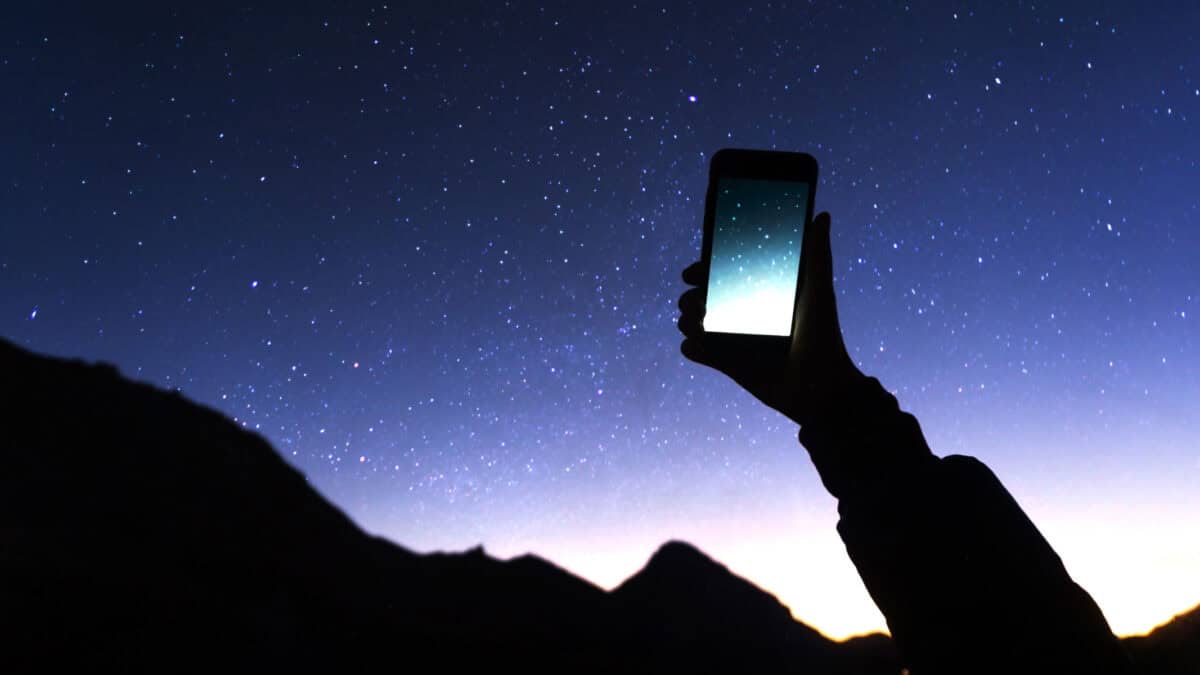
Mistake 1: Expecting the Sky to Look Like Photos
Many beginners expect to see bright, colorful galaxies like those shown in online images. Most of those photos are long-exposure images taken with specialized equipment.
Simple fix: Start with realistic targets that look great visually — the Moon, bright planets, and star clusters. Once you get a few “wins,” the night sky becomes far more exciting.
Mistake 2: Going Out at the Wrong Time
If you go out when the Moon is very bright, or when clouds are thin but widespread, the sky can look empty. Beginners often assume they chose a bad location when it’s simply bad timing.
Simple fix: Choose a clear night. For more stars, go out when the Moon is small or not in the sky. For beginners, early evening is fine — you don’t need midnight.
Mistake 3: Standing Under Direct Lights
Streetlights, porch lights, and even bright windows reduce what you can see. This is one of the biggest reasons beginners feel underwhelmed.
Simple fix: Move away from direct lights. Use the shadow of a building or trees to block glare. Even a small change in location can make a big difference.
Mistake 4: Not Letting Your Eyes Adjust
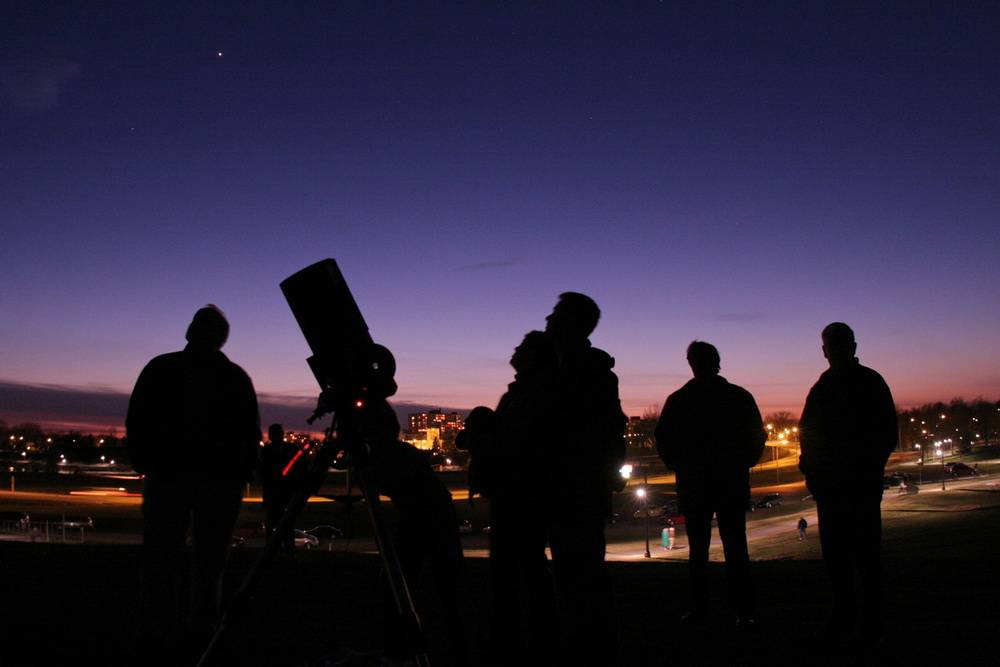
Your eyes need time to adapt to darkness. Beginners often decide the sky is “not good” within 2 minutes — right before their vision would improve.
Simple fix: Give your eyes 10–15 minutes. Avoid bright phone screens. If you need light, use a red flashlight or red screen mode.
Mistake 5: Using a Phone App Too Much
Apps are helpful, but if you stare at your screen constantly, you lose night vision and miss the experience.
Simple fix: Use an app to confirm what you’re seeing, then put the phone away for a few minutes and observe naturally.
Helpful: See our guide to stargazing apps for beginners.
Mistake 6: Trying to Learn Everything in One Night
Beginners often try to find planets, constellations, galaxies, and meteor showers in one session. That leads to frustration.
Simple fix: Choose one goal per night. For example: “Tonight I’m observing the Moon,” or “Tonight I’m learning one constellation.”
Mistake 7: Buying a Telescope Too Quickly
This is one of the biggest stargazing mistakes beginners make. A telescope can be amazing — but the wrong one can be frustrating on night one.
Simple fix: Start with the basics, then buy a telescope once you understand what you want to observe (the Moon/planets vs. deeper space).
Read: Choosing Your First Telescope (Without the Confusion)
Mistake 8: Choosing Unstable or “Wobbly” Gear
A shaky tripod can ruin the experience. Beginners often assume the optics are bad when the real issue is stability.
Simple fix: Choose stable, beginner-friendly setups. If you want a clear starting point, see our guide to the best telescopes for beginners.
Mistake 9: Forgetting Comfort (Cold Ends Nights Fast)
Most people don’t realize how quickly the temperature drops at night. Discomfort is one of the fastest ways to end a good stargazing session early.
Simple fix: Bring a chair, a warm layer, and a hot drink. Comfort keeps you outside longer, and longer observing always leads to better nights.
A Simple Next Step
If you want a calm step-by-step starting point, begin here:
Read: Beginner Stargazing Guide
If you want to explore darker skies near you, you can use a light pollution map, such as Dark Sky Finder, to find better viewing areas.
The night sky rewards patience. Fix a few small mistakes, slow the process down, and your stargazing nights become far more enjoyable — even as a complete beginner.