

The Purpose of Constellations.
The purpose of constellations is to help us identify stars. How often have you stood under the night sky, looking at the stars, and spotted the Big Dipper? How about Orion’s Belt? Yes, you read that last sentence correctly.
I don’t mean to disappoint you, but constellations aren’t real. The poets, farmers, and astronomers have made them real for us within the past 6,000 years. The sole purpose of constellations is to help us identify which stars are which.
Believe it; you can see between 1000 and 1500 stars on a clear night. That is a lot of stars to keep track of. What the constellations do is divide the sky into parts to make it easier to manage. You can obtain sky maps to help you pinpoint the constellations.
When you first observe, the sky looks like one giant constellation, and that is because it is. Knowing the different patterns will help you divide it, just as our ancestors did many years ago.
Importance of Constellations
Why is the purpose of constellations so essential?
Well, first of all, farmers used them to determine when to plant and harvest. Different constellations are visible during other seasons. They can also be used to tell what month it is. When farmers saw specific constellations, they would know when certain events needed to occur. Of course, now, farmers have other means of determining when to plant and harvest
It wasn’t just the farmers who relied on the constellations. Many other cultures relied on them as well. Cultures began creating star charts and atlases to map the night sky.
The purpose of constellations has changed over time. In 1929, the International Astronomical Union adopted official constellation boundaries that distinguished the eighty-eight official constellations.

The Big Dipper
One of the more famous is the Big Dipper or the Plough if you’re British.
This was known, amongst others, as a dipper to African Americans. For instance, the dipper marked the way to the free north for brave enslaved people. The news of the dipper of freedom would be sung in codified songs with words leading the way to liberation.
The Big Bear.
While this star group is well known, the constellation is also part of an enormous conglomeration of stars known as Ursa Major, the Big Dipper. It was named by the ancient Greeks, notably after Callisto, a maiden who fell out of favor with the goddess Artemis.
Interestingly, numerous Native American tribes also considered this cluster to represent a bear. Possibly due to how far north it is, where few animals, aside from a bear, could survive.
Next, we have The Big Bear’s little brother (or son, from the Greek legend of Arcas), Ursa Minor. Within the Little Bear is Polaris, the North Star. This star grouping has been known since at least 600 BC and was known to Thales, reputedly the first Western philosopher.
Bright star of Sirius
Dog lovers rejoice as Canis Major is for them. Leading the pack of this star grouping is the bright star of Sirius, the Dog Star. This star and its constellation have a long history of myth within the ancient world. Sirius has been associated with death and famine.
Sirius, confirmed in 1862, is a “devil star” -that is, a binary star. A smaller star, utterly invisible to the naked eye, circles the dog.
However, in anthropological literature, it has been found that the Dogon. A tribe in North Africa believed Sirius was binary centuries before modern science confirmed it.
The Crux
The crux, or the Southern Cross, is the smallest of constellations. Having once been a part of Centaurus, but later associated on its own for religious purposes. The crux was originally just visible over the horizon. However, it drifted down over time. Only to be rediscovered by explorers who found the star icon both inspiring and helpful for navigation.
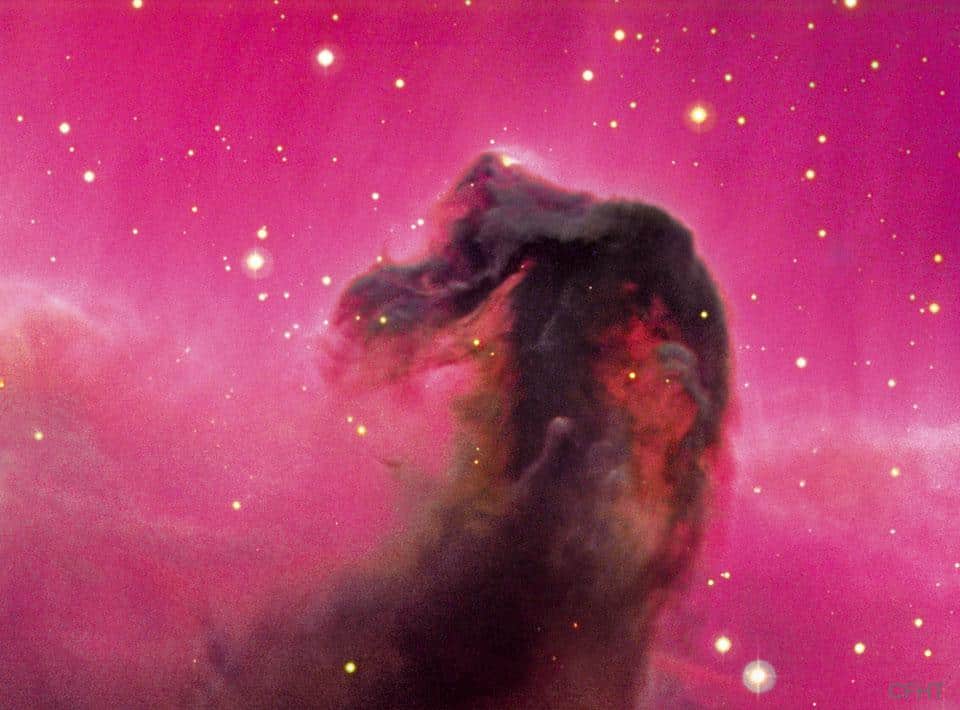
Famous Horsehead Nebula
Probably the most famous of all constellations is Orion. An equatorial asterism, his belt is straightforward to identify. Just to the left of the belt of the mighty archer is the famous Horsehead Nebula. Above this, Orion’s armpit is Betelgeuse. Below and to the right of Betelgeuse is Rigel (which every Star Trek fan will recognize).
This list is hardly exhaustive and merely hints at some better-known constellations. Learning about these heavenly bodies can lead to a knowledge of mythology and history, veritable stars in their own right.
Conclusion
It comes down to the fact that the constellations were not discovered. But they were invented to create easy-to-remember patterns for the stars. The neat point is that the most famous ones were invented before recorded history began.
There are many interesting facts regarding the purpose of constellations and their history. Looking up into the sky on a clear night can be a relaxing and rewarding experience. Better yet, the Internet will allow you to study their meanings and history—what a way to impress your friends.