
How to spot the Orion Nebula in 2026 with your eyes or a beginner telescope or binoculars. A simple guide to finding one of the brightest and most beautiful deep-sky objects.
Step outside on a cool night and look up. The Orion Nebula in 2026 is one of the most stunning sights in the sky, and you don’t need any special equipment to find it.
Face southeast to spot the constellation Orion. The nebula sits just below Orion’s famous belt, which is made up of three bright stars in a row. Seeing it for the first time is unforgettable.
If you want to see a deep-sky object without any hassle, the Orion Nebula is a great place to begin. Here’s a simple, step-by-step guide to help you find it.
Why the Orion Nebula in 2026 Is Perfect for Beginners
Some nebulae are faint and difficult to locate, but the Orion Nebula in 2026 is different. It’s bright, easy to recognise, and visible. Many nebulae are hard to find, but the Orion Nebula stands out.
It’s bright, easy to spot, and you can see it even if there’s some light pollution. With just your eyes, it looks like a small, glowing patch.
Binoculars reveal a bright cloud, and a small telescope shows its shape and details. If you live in a city, try turning off nearby lights or heading to a darker spot outside town.
These simple steps can help you enjoy the nebula’s beauty, even from urban areas. Look for three stars in a straight line; this is Orion’s Belt.
Once you’ve found it, the rest becomes simple.
Below the belt, you’ll see a short row of stars called Orion’s Sword. The middle “star” looks a bit fuzzy, even without equipment.
That’s the nebula. It has shone in that spot for millions of years, and you can see it with just your eyes.
What You’ll See with Your Eyes
If the sky is reasonably dark, you’ll notice a pale patch of light where the middle sword star should be. It doesn’t sparkle like other stars.
It looks soft, almost like a tiny cloud. That’s the Orion Nebula in 2026, a massive region of gas and dust where new stars are being born right now.
Even seeing it faintly is a decisive moment.
Many people are surprised by how much they can see with just their eyes.
Many people are surprised by how much they can see with just their eyes.
What you’ll see through binoculars makes the nebula stand out. You’ll notice a brighter glow, a more precise shape, and some structure inside it.
The area around the nebula is filled with stars, creating a striking view. For example, 10×50 binoculars can make the nebula appear about 60 times brighter than with your eyes alone.
The ’10x’ means the image is ten times closer, and ’50’ is the lens size in millimeters, which helps gather more light.
Good beginner options include the Celestron SkyMaster 10×50 and Celestron SkyMaster Pro ED binoculars, both excellent instruments to view the nebula.
Many beginners use binoculars before getting a telescope, and the Orion Nebula in 2026 is a great target to start with.
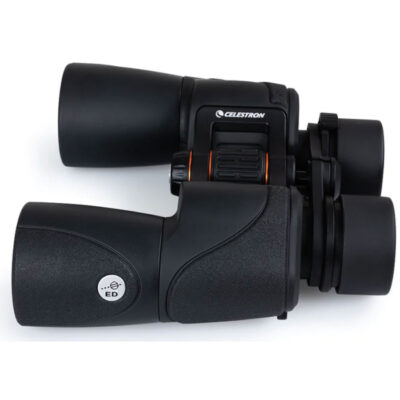
Celestron 7×50 Skymaster Binoculars
What You’ll See Through a Small Telescope
With a beginner telescope, you can see the nebula’s wings, curves, and bright center. In the middle, there’s a group of young stars called the Trapezium.
It’s one of the most impressive sights for new stargazers. With a budget telescope, the Orion Nebula in 2026 feels large, alive, and full of detail.
It’s one of those views that stay with you long after you pack up for the night.
The Best Time to See It
You can see the nebula for several months each year. It looks best from December to March in the Northern Hemisphere and from June to September in the Southern Hemisphere.
In early 2026, it will be high in the sky by mid-evening, so you won’t have to stay up late to see it.
You’ll get the clearest view on a night without the moon, but the nebula is still bright enough to see even if there’s a half-moon.
A Moment Worth Experiencing
Finding the Orion Nebula in 2026 is a big moment for any stargazer. It’s easy to spot, simple to observe, and beautiful to see. You’re looking at a place where new stars are being born.
Take your time. Let your eyes get used to the dark. Relax and enjoy the view. To help your eyes adjust, avoid looking at phone screens or bright lights, and give yourself 15 to 30 minutes in the dark.
This will help you see more details in the nebula and make the experience even better.
Some things in the sky never lose their magic.
Some things in the sky never lose their magic.

Explore beginner telescopes and binoculars here: