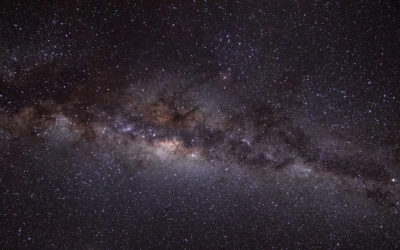
The Milky Way
Learn how to see the Milky Way with your own eyes. Discover the best time, locations, and conditions for viewing our galaxy in the night sky.
For many people, the Milky Way is something they have only seen in photographs.
Images of a glowing band of stars stretching across the sky appear in travel magazines and astrophotography galleries, often looking almost unreal. Yet the Milky Way is not just a photographic phenomenon. It can be seen with the human eye under the right conditions.
Learning how to see the Milky Way today requires understanding a few key conditions that allow the galaxy to reveal itself again, one of the most rewarding experiences when you first learn how to start stargazing.
What the Milky Way Actually Is
When you look at the Milky Way, you are looking across the disk of our own galaxy.
Our solar system sits within a vast spiral galaxy containing hundreds of billions of stars. Because we live inside this galaxy, we see its dense star fields as a faint glowing band stretching across the sky.
That soft, misty light is not a cloud or a nebula. It is the combined glow of enormous numbers of distant stars, too faint and too numerous for our eyes to distinguish individually.
Realising that the Milky Way is the structure of our own galaxy often changes the way people think about the night sky. Instead of seeing isolated stars, you begin to understand that you are looking into a vast cosmic system.
Why Many People Have Never Seen It
Despite its beauty, many people today have never seen the Milky Way clearly.
The reason is simple: light pollution.
Artificial lighting from cities, towns, and suburban areas brightens the night sky and washes out faint celestial objects. Under heavily illuminated skies, only the brightest stars remain visible.
The Milky Way is delicate. The artificial brightness of streetlights and buildings can easily obscure its glow.
For many people, the first time they travel to a truly dark location and see the Milky Way stretching across the sky becomes an unforgettable experience.
The Importance of Dark Skies
Darkness is the single most important factor in seeing the Milky Way.
Locations far from urban areas provide the best opportunity. National parks, remote countryside, deserts, and coastal areas away from city lights often reveal darker skies dramatically.
Even moving a modest distance away from major population centres can make a remarkable difference. As the sky grows darker, thousands of additional stars begin to appear, and the Milky Way slowly becomes visible as a faint luminous band.
Observers often describe this moment as the sky suddenly “coming alive.”

The Best Time of Year
The Milky Way is visible at different times throughout the year, but certain months offer the most dramatic views.
In late spring, summer, and early autumn, the central region of the Milky Way rises in the night sky across much of the world. This region contains the densest concentration of stars and produces the most striking views of the galaxy.
During the winter months, the Milky Way is still visible but appears more subtle because we are looking toward its outer regions rather than its bright central core.
Understanding these seasonal changes helps observers choose the best time of year to experience the Milky Way at its most impressive.
The Best Time of Night
Just as the seasons influence how to see the Milky Way and what we see in the sky, the time of night also plays an important role.
Shortly after sunset, the sky still contains traces of twilight. As the night deepens, the Sun sinks farther below the horizon, and the sky grows darker.
For many locations, the Milky Way becomes most visible several hours after sunset, when darkness has fully settled, and the galaxy has risen higher above the horizon.
These late evenings or early mornings often produce the clearest views.
Clear Weather and Good Conditions
Atmospheric conditions can also affect how to see the Milky Way.
Dry, clear air produces the best visibility. Moisture, dust, or haze can scatter light, reducing contrast in the sky and making the galaxy harder to distinguish.
High-altitude locations often provide excellent conditions because the air is thinner and contains fewer particles.
Even modest improvements in atmospheric clarity can make the Milky Way appear more defined and luminous.
Using Binoculars or a Telescope
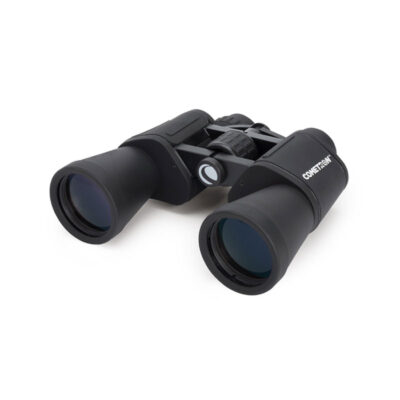
Although the Milky Way can be seen with the naked eye, binoculars can dramatically enhance the experience.
Instead of a soft glow, binoculars reveal countless individual stars packed closely together. Star clusters and dark dust lanes within the galaxy begin to appear, adding texture and depth to the view.
Telescopes can also explore individual regions of the Milky Way in remarkable detail, revealing nebulae and dense star fields that are invisible to the naked eye.
If you are curious about what becomes visible with optical equipment, you may enjoy our guide explaining what you can see with a telescope.
Seeing Our Place in the Galaxy
Observing the Milky Way often creates a quiet sense of perspective.
That glowing band across the sky represents the galaxy that contains our Sun, our solar system, and our home planet. Every star visible within that faint river of light belongs to the same immense structure.
For many people, the first clear view of the Milky Way becomes a turning point in their relationship with the night sky.
It transforms astronomy from an abstract idea into something deeply personal.
Take the time to find a dark sky and let your eyes adjust. With patience and the right conditions, anyone can experience the wonder of seeing our own galaxy stretching across the heavens. Enjoy the experience, and let it deepen your connection to the universe above.

Explore beginner telescopes, binoculars, and the best stargazing apps for beginners here: