How to See the ISS
How to see the ISS in 4 easy steps. Use NASA’s free tracker, find the right time and direction, and spot the space station without a telescope.
Imagine standing outside on a clear evening and watching a brilliant point of light move steadily across the sky.
It isn’t a star. It isn’t an airplane. And it isn’t a planet.
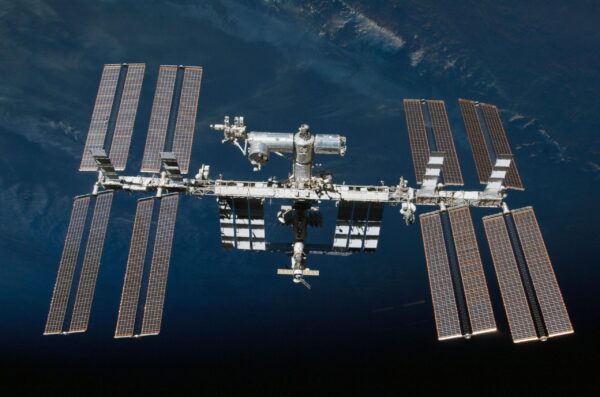
It’s the International Space Station, traveling high above Earth with astronauts living and working aboard.
On a favorable pass, the space station can shine brighter than any star in the night sky. And the remarkable thing is that you don’t need a telescope, binoculars, or any special equipment to see it.
You need to know when and where to look.
Here’s how to find it.
What does the International Space Station look like from Earth?
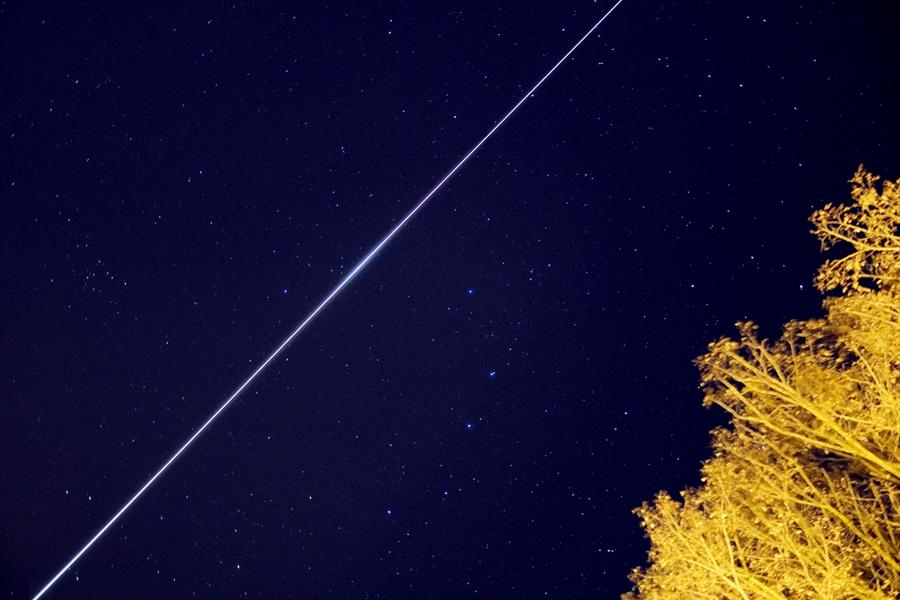
The International Space Station, usually called the ISS, looks like a bright white point of light moving smoothly across the sky.
It doesn’t show the flashing navigation lights you’d normally see on an airplane.
Instead, it glides steadily overhead, sometimes becoming remarkably bright before fading from view.
You won’t see its solar panels or individual sections with your naked eye. From the ground, it appears as a single moving light.
A typical visible pass lasts only a few minutes.
That’s why knowing the correct time and direction makes such a difference.
Step 1: Find out when the space station will pass over your location
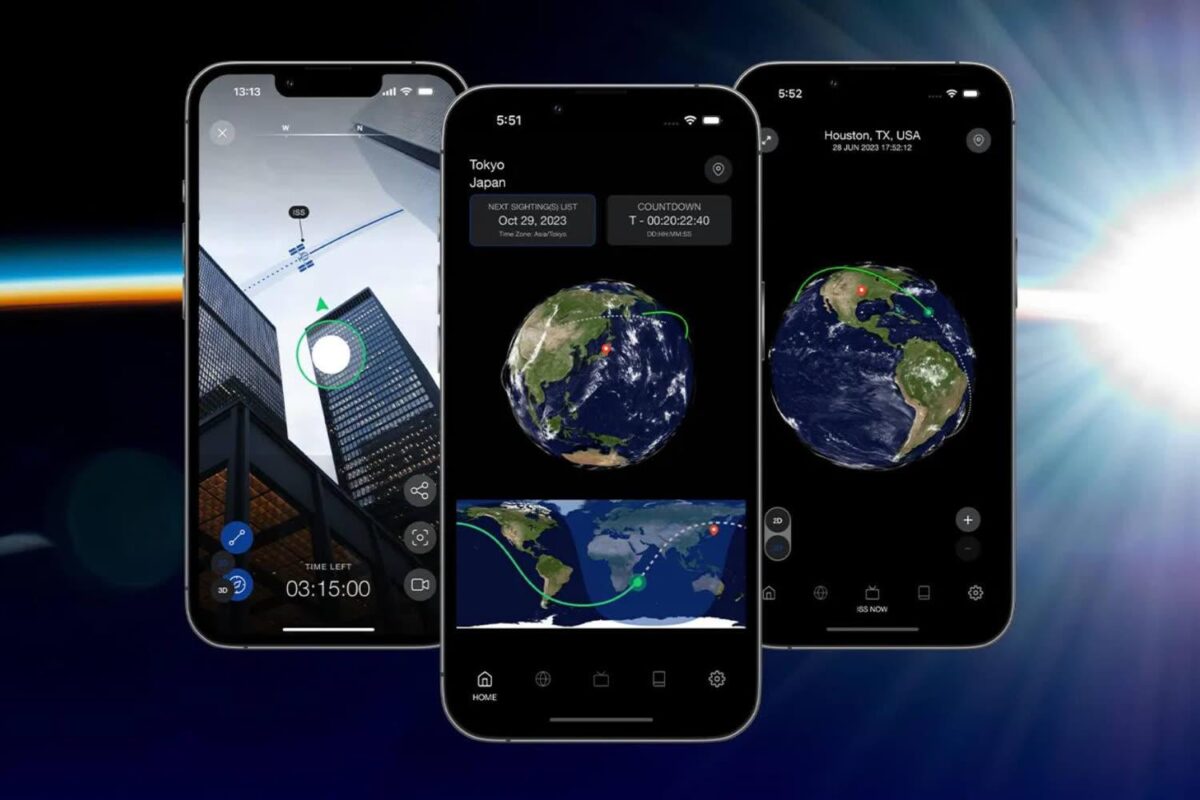
The easiest way to find the ISS is to use NASA’s free Spot the Station service.
It provides viewing predictions based on your location, including the time, direction, and height of upcoming visible passes.
You can use the website or download NASA’s official mobile app.
Start here: NASA — Spot the Station..
How to use Spot the Station
- Open NASA’s Spot the Station website.
- Select View Sightings by City to find viewing opportunities for your area, or download the Spot the Station app.
- If using the app, set your preferred observing location and open the upcoming sightings list.
- Choose a viewing opportunity and note its local time, maximum height, and the directions where the ISS appears and disappears.
- Be outside several minutes before the predicted time so you’re ready.
The app can also send notifications about upcoming passes, which is useful if you don’t want to keep checking the schedule.Not every orbit produces a visible pass from your location. Sometimes you’ll have several opportunities in a week; at other times, you may need to wait longer.The predictions also depend on your location, so use your own city or observing area rather than a schedule published for somewhere else.Step 2: Understand the time, direction, and height
NASA’s viewing information contains a few terms that can look technical at first.Fortunately, they’re straightforward once you know what they mean.Time: When the ISS is expected to become visible. NASA provides the time for your selected location.Visible duration: Approximately how long you’ll be able to see the station during that pass.Appears: The compass direction and height above the horizon where the station first becomes visible.Maximum height: The highest point the station reaches in the sky during the pass.Disappears: The direction and height where the station is expected to leave your view.For example, a prediction might tell you that the station will appear in the west, climb to 50 degrees above the horizon, and disappear towards the east.That tells you where to stand, which direction to face, and how high to look.But how do you measure 50 degrees without an instrument?That’s where a simple trick comes in.Step 3: Use your fist to measure height in the sky
Astronomers measure the height of objects above the horizon in degrees.The horizon is 0 degrees.Directly overhead is 90 degrees.You don’t need a chart or measuring instrument to estimate these angles.Just use your hand.The fist trick
Hold one arm straight out in front of you and make a fist.At arm’s length, the width of your fist covers approximately 10 degrees of the sky.Place the bottom of your fist level with the horizon.The top of your fist is now roughly 10 degrees above it.Stack another imaginary fist above the first, and you’re looking about 20 degrees up.Five fist-widths take you to approximately 50 degrees.So if NASA predicts that the ISS will reach a maximum height of 50 degrees, you already know roughly how high to look.It isn’t a precision measurement, but it’s accurate enough to help beginners find their way around the sky.And once you’ve learned it, you can use the same trick to estimate the height of the Moon, planets, and stars.Step 4: Go outside a few minutes early
Choose somewhere with a reasonably open view of the sky.A backyard, park, or quiet open area can work well, as long as buildings and trees don’t block the direction where the station will appear.Check the predicted time and face the correct compass direction.Then wait.When the ISS becomes visible, look for a bright point of light moving steadily across the sky.Unlike a star, it won’t remain in one position.Unlike most airplanes, it won’t have regularly flashing navigation lights.It may become brighter as it climbs, then gradually fade as it moves away.Sometimes it disappears quite suddenly when it enters Earth’s shadow.That doesn’t mean anything has happened to the station. It simply means sunlight is no longer illuminating it from your viewpoint.If the predicted pass doesn’t appear, check for cloud cover or obstructions and try another opportunity.
What are you actually looking at?
Here’s something worth sharing with whoever is standing beside you.That bright moving light is a permanently crewed research laboratory orbiting roughly 400 kilometers above Earth, traveling at about 28,000 kilometers per hour.It circles our planet approximately once every 90 minutes.The station shines because sunlight reflects off its structure and large solar arrays.You’re not seeing lights switched on by the astronauts.You’re seeing sunlight reflected from a spacecraft traveling above our planet.And aboard that spacecraft, people live, work, and conduct scientific experiments.It’s a remarkable thought when you’re standing in your own backyard watching it pass overhead.Why can you see the space station on some nights but not others?
The ISS circles Earth many times each day, but that doesn’t mean it’s visible every time it passes your location.To see it clearly, two conditions generally need to coincide.The sky around you needs to be sufficiently dark, and the station needs to be illuminated by the Sun.That often happens shortly after sunset or before sunrise.While you’re standing in darkness, the station can still be high enough above Earth to catch sunlight.That’s what makes it shine against the darker sky.During other passes, the station may be hidden in Earth’s shadow or traveling overhead in daylight.This is why NASA’s location-specific predictions are so useful.They help you identify the passes worth watching rather than guessing.Do you need a telescope to see the ISS?
No. In fact, for your first sighting, I’d recommend leaving the telescope inside.The ISS moves quickly, and following it through a narrow telescope field of view can be difficult.Watching it with your naked eyes allows you to appreciate its movement across the sky without struggling to keep it centered.Binoculars aren’t necessary either.The experience comes from recognizing what you’re seeing, not from magnifying it.Once you’ve watched the ISS successfully, you’ll have taken one of the simplest and most rewarding first steps into amateur astronomy.Your first sighting could be the beginning of something bigger.
There’s something memorable about watching the International Space Station cross the sky.One moment, you’re looking at an ordinary evening sky.A few minutes later, you’ve watched a spacecraft carrying human beings travel overhead.No expensive equipment. No complicated setup. Just a little preparation and knowing where to look.And that experience often leads to another question.What else is up there?The Moon, Jupiter, Saturn, and countless stars are waiting to be explored.If watching the ISS has sparked your curiosity, our First Night With Your Telescope guide explains how to begin observing with a telescope, what to look for, and how to avoid common beginner frustrations.Start with the space station. Look up at the right time. And discover just how much there is to see above your own backyard.
Explore beginner telescopes,binoculars and best stargazing apps for beginners here: