Why Venus Is Often Mistaken For A Star
Learn how to identify Venus in the night sky, why it shines so brightly, and how to tell Venus apart from stars and other planets. And why it shines brighter than most celestial objects.
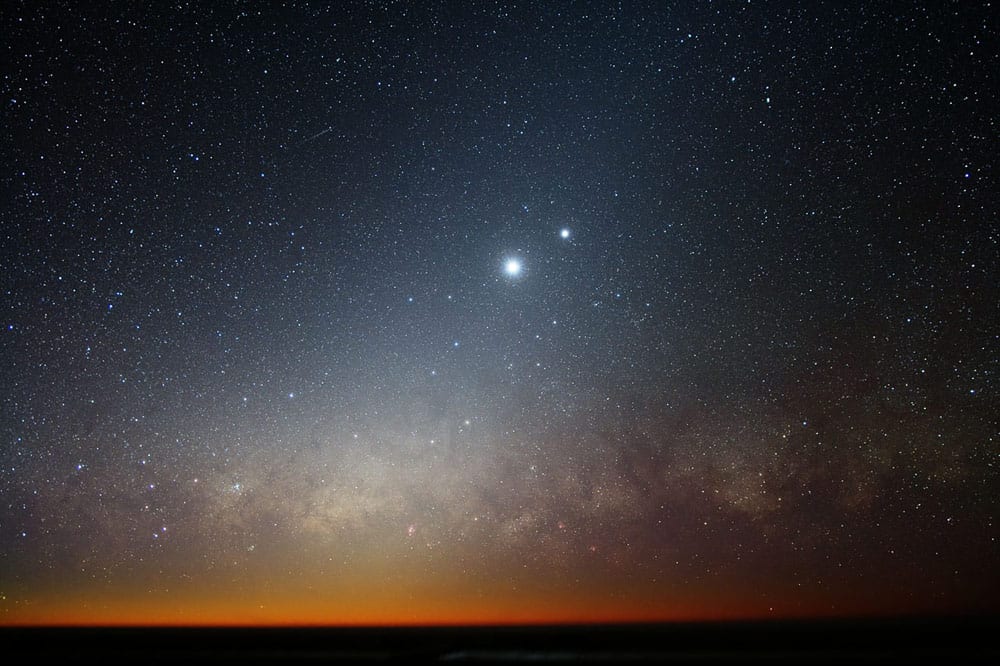
If you’ve ever looked up shortly after sunset and noticed a brilliant light shining in the sky, there’s a good chance you’ve wondered what it was.
Many people assume they’re looking at a particularly bright star. In reality, one of the most commonly misidentified objects in the night sky is not a star at all.
It’s Venus.
For thousands of years, Venus has captivated observers worldwide. Long before telescopes existed, people noticed its unusual brightness and regular appearance in the evening and morning sky. Entire civilizations built stories, myths, and calendars around its movements.
Even today, beginner astronomers frequently mistake Venus for a star because it often appears brighter than every other object visible after sunset.
Once you understand why Venus shines so brightly and how it differs from a true star, you’ll never look at it the same way again.
What Is Venus?
Venus is the second planet from the Sun and Earth’s closest planetary neighbor.
Although Venus is often called Earth’s twin because of its similar size, the two worlds are remarkably different. Venus is covered by thick clouds and has a surface temperature hot enough to melt lead.
Fortunately, none of that matters when you’re standing in your backyard looking up at the evening sky.
What matters is that Venus is one of the brightest objects visible from Earth.
Unlike stars, Venus does not produce its own light. Instead, it reflects sunlight, much like the Moon does. Every time you see Venus shining in the sky, you’re actually seeing sunlight bouncing off its dense cloud cover.
This reflected sunlight is the key to understanding why Venus appears so bright.
Why Does Venus Shine So Brightly?
Several factors combine to make Venus extraordinarily bright.
The first is its distance from Earth. Venus is one of our closest planetary neighbors, meaning it appears larger and brighter than many other planets.
The second factor is its cloud cover. Venus is permanently wrapped in highly reflective clouds that act almost like a giant mirror in space. These clouds reflect a large percentage of the sunlight that reaches them.
Finally, Venus spends much of its time appearing relatively close to the Sun from our perspective. This means it is often visible during twilight, when the sky is dark enough for Venus to stand out dramatically but before it becomes crowded with stars.
The result is a brilliant object that often draws the attention of people who may never have looked closely at the night sky.
Why People Think Venus Is A Star
Most people are far more familiar with stars than planets.
When an unusually bright point of light appears in the evening sky, the natural assumption is that it must be a star.
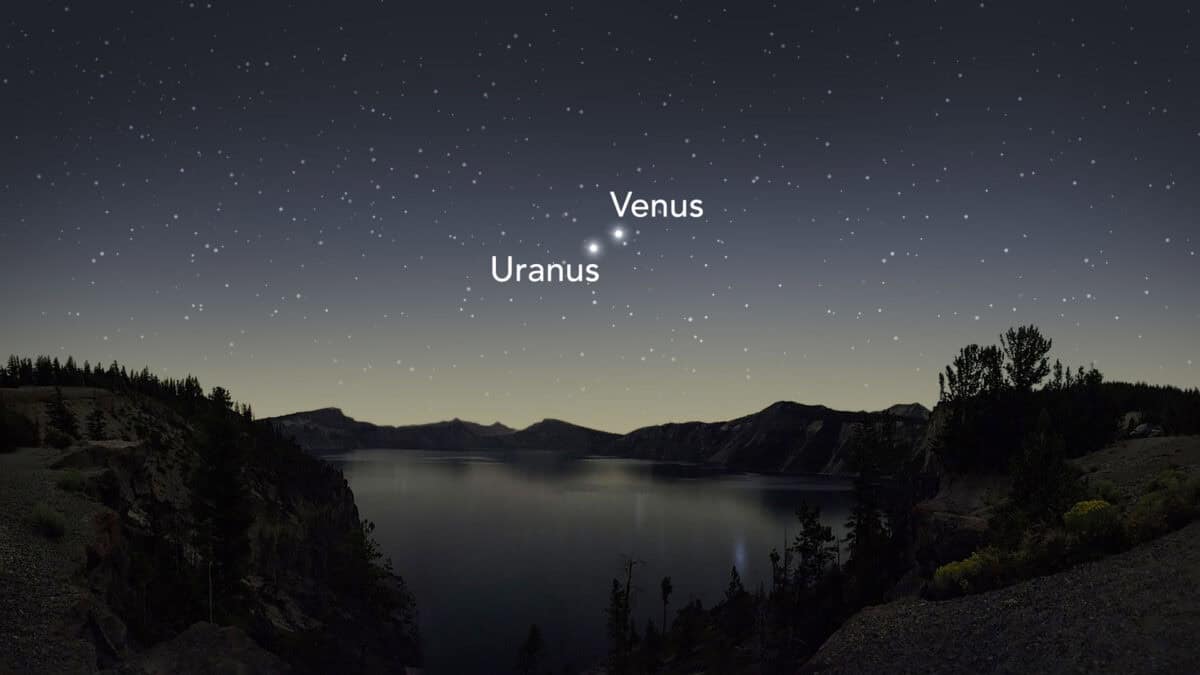
From a casual glance, Venus and a bright star can appear similar. Both look like small points of light against a dark background. Neither reveals obvious details to the naked eye.
Because Venus is often brighter than the surrounding stars, many observers assume they’re looking at the brightest star in the sky.
In reality, there are times when Venus outshines every star visible from Earth.
It’s easy to see why the confusion occurs.
The Morning Star And The Evening Star
Venus has earned two famous nicknames throughout history.
When Venus appears before sunrise, it is often called the Morning Star.
When it appears after sunset, it is known as the Evening Star.
These names existed long before astronomers understood that Venus was a planet.
Ancient observers often believed the Morning Star and Evening Star were two separate celestial objects because they never appeared in the sky at the same time.
Eventually, careful observations revealed that both were actually the same object following a predictable path around the Sun.
The names survived, even after people learned the truth.
Today, you’ll still hear Venus referred to as both the Morning Star and the Evening Star, even though it is neither a morning star nor an evening star. It is a planet.
How To Identify Venus In The Night Sky
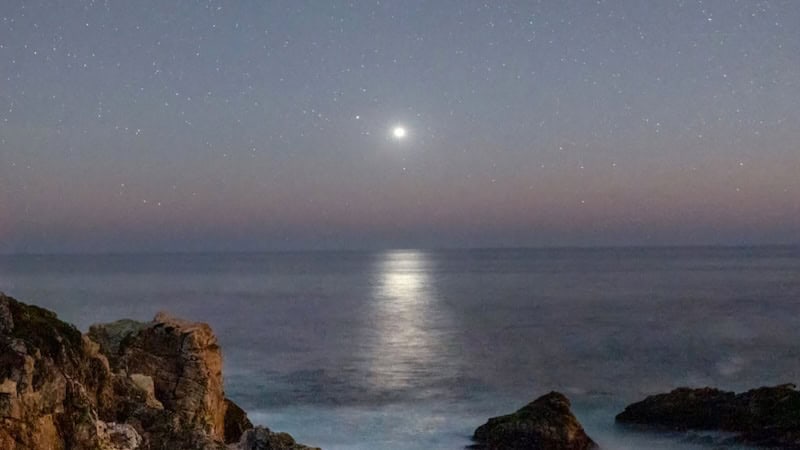
One of the easiest ways to identify Venus is by its brightness.
If you notice an object that seems unusually bright compared to everything else around it, Venus is a strong possibility.
Another clue is its position. Venus is always found relatively close to the horizon shortly after sunset or before sunrise. Unlike many stars that travel high overhead, Venus tends to remain in the western or eastern portions of the sky, depending on the season.
You can also pay attention to how the object behaves.
Stars often appear to twinkle or flicker because their light passes through Earth’s atmosphere. Venus usually shines with a steadier, more consistent light.
This difference becomes more obvious the longer you observe.
Does Venus Twinkle?
This is where things become interesting.
Although Venus usually appears steadier than stars, it can sometimes twinkle when it is low on the horizon.
At these lower angles, its light passes through a greater amount of Earth’s atmosphere, creating effects similar to those seen with stars.
However, Venus typically twinkles far less than most stars because it appears as a tiny disc rather than a distant point of light.
This is one reason experienced observers can often distinguish Venus from nearby stars at a glance.
When Is The Best Time To See Venus?
Venus is most commonly visible during the hours surrounding sunrise and sunset.
The exact timing changes throughout the year because Venus is constantly moving in its orbit around the Sun.
Sometimes it dominates the western sky after sunset.
At other times, it rises before dawn and shines brightly in the eastern sky.
The easiest way to locate Venus is to use a stargazing app or check an astronomy website that tracks current planetary positions.
Once you know where to look, Venus is often impossible to miss.
Why Venus Is One Of The Best Objects For Beginner Astronomers
Many people begin astronomy by searching for distant galaxies, nebulae, or faint star clusters.
Those objects are fascinating, but they can also be difficult to find.
Venus offers something different.
It provides an immediate connection with the night sky.
No telescope is required.
No advanced knowledge is needed.
You step outside, look up, and observe one of the brightest worlds in our solar system.
That experience often becomes the first step in a much larger journey of exploration.
Final Thoughts
If you’ve ever pointed to a bright object after sunset and called it a star, you’re certainly not alone.
Venus has been fooling observers for thousands of years.
Its remarkable brightness, steady glow, and frequent appearance during twilight make it one of the most easily recognized—and most frequently misidentified—objects in the sky.
The next time you notice an unusually bright “star” shining in the evening sky, take a closer look.
You may not be looking at a star at all.
You may be looking at Venus, our brilliant planetary neighbor and one of the most rewarding sights available to every beginner astronomer.
Want to learn more about the night sky?
Explore our beginner stargazing guides and discover how easy it can be to start understanding the universe above you.