
Finding Dark Sky Locations for Stargazing
How to find dark sky locations for stargazing and avoid light pollution. Discover simple ways beginners can locate better night skies.
One of the most important factors that determines what you can see in the night sky is darkness. Even the best telescope cannot overcome the effects of heavy light pollution. For beginners learning astronomy, understanding how to find dark sky locations for stargazing can dramatically improve the experience.
Many people assume that the night sky looks the same everywhere. In reality, the difference between a brightly lit city and a truly dark location can be extraordinary. Under city lights, you may only see a few dozen stars. Under dark skies, you may suddenly see thousands of stars stretching across the sky.
Learning how to find dark sky locations for stargazing is, therefore, one of the most valuable skills a beginner can develop when they first start stargazing.
Understanding Light Pollution
Light pollution occurs when artificial lighting from cities, streetlights, buildings, and vehicles scatters through the atmosphere. This scattered light brightens the sky and reduces the contrast between celestial objects and the background sky.
The result is that faint stars, nebulae, and galaxies become extremely difficult, if not impossible, to see.
For beginners living in cities or suburbs, this often leads to the mistaken belief that there are not many stars visible. In reality, they are still there — they are just hidden behind the glow of artificial light.
Finding darker skies allows those hidden stars to appear again.
Why Dark Skies Matter
Light pollution occurs when artificial lighting from buildings, streets, and cities scatters through the atmosphere. This scattered light reduces contrast in the sky and hides faint stars and galaxies.
Under heavy light pollution, you might see only a few dozen stars. Under a truly dark sky, you may see thousands.
For beginners, moving even a short distance away from bright city lights can dramatically improve the stargazing experience.
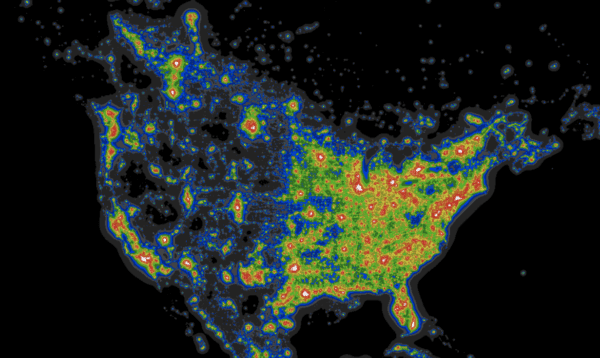
online light pollution map of the USA
Use Light Pollution Maps
One of the easiest ways to locate darker skies is to use online light pollution maps. These maps show how bright the night sky is across different regions.
One of the most widely used tools is:
Dark Site Finder
This map uses color shading to represent sky brightness. Areas shown in darker colors indicate much better conditions for observing the night sky.
By exploring these maps, beginners can quickly identify nearby regions where the sky is significantly darker than their home location.
Even a short drive away from a city can sometimes make a remarkable difference.
Look for Parks and Rural Areas
Natural landscapes often provide excellent stargazing conditions. National parks, rural farmland, mountain regions, and coastal areas frequently offer darker skies than urban environments.
Large open spaces also provide clear views of the horizon, which helps observe constellations as they rise and set.
When searching for dark sky locations for stargazing, it is often helpful to look for locations that combine several advantages:
Distance from major cities
Minimal street lighting
Open landscapes with wide sky views
These environments allow your eyes to adapt to the darkness, revealing far more stars.
Give Your Eyes Time to Adjust
Even in a dark location, it takes time for your eyes to adapt. This process is known as dark adaptation.
After about 15 minutes in darkness, your eyes become much more sensitive to faint light. Stars that were invisible at first gradually begin to appear across the sky.
Bright phone screens and flashlights can interrupt this process. Many experienced stargazers, therefore, use red lights or dim lighting when observing.
Allowing your eyes to adjust fully is one of the simplest ways to improve what you see in the night sky.
Combine Dark Skies With Stargazing Tools
Finding dark sky locations for stargazing becomes even more rewarding when combined with a few helpful tools.
Beginner stargazers often use astronomy apps to identify constellations, planets, and other celestial objects. These apps act as guides, helping you understand what you are seeing.
You may find it helpful to explore our guide to Stargazing Apps for Beginners, which explains how these tools work.
If you are new to the hobby, our Stargazing for Beginners guide also explains how to plan your first night observing the sky.

Dark Skies Reveal the Milky Way
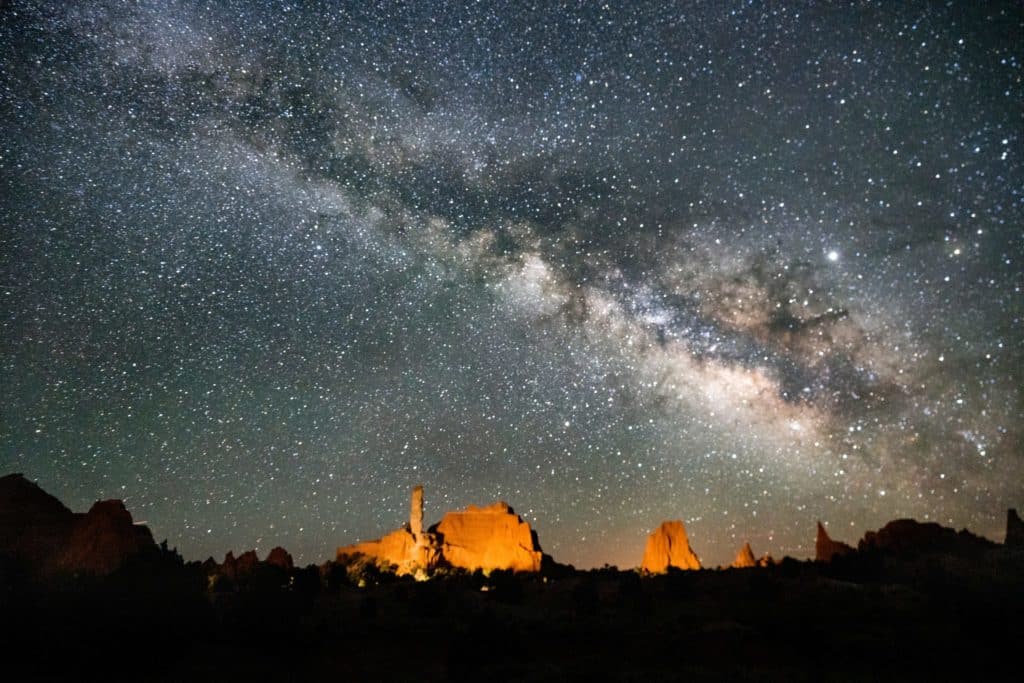
One of the most dramatic differences between city and dark skies is the appearance of the Milky Way.
Under heavy light pollution, the Milky Way is almost impossible to see. Under dark skies, however, it appears as a faint glowing band stretching across the sky.
Seeing the Milky Way for the first time is often a transformative moment for beginner stargazers. It reveals just how vast our galaxy truly is.
For many people, discovering the Milky Way becomes the moment when astronomy turns from curiosity into a lasting passion.
Dark Skies Are Often Closer Than You Think
Many beginners assume they must travel hours to escape light pollution. While remote wilderness locations offer spectacular skies, darker conditions are often closer than expected.
A short drive outside a major city, a nearby rural road, or a local park away from streetlights can dramatically improve visibility.
Learning how to find dark sky locations for stargazing is therefore less about traveling great distances and more about understanding where artificial light is reduced.
With a little exploration, you may discover that a much darker sky exists only a few miles away.
The Sky Rewards Patience
The night sky is always changing. Constellations rise and set, planets move across the heavens, and seasonal patterns reveal different parts of the universe throughout the year.
By finding darker skies and giving yourself time to observe, the sky gradually reveals more of its hidden details.
Thousands of stars, distant galaxies, and glowing nebulae are waiting to be discovered.
Sometimes the most important step in astronomy is simply finding a darker place to look up.

Explore beginner telescopes, binoculars, and the best stargazing apps for beginners here: