Christmas Telescope Gift Guide 2026
A telescope can be a wonderful Christmas present. It offers something few other gifts can: the chance to see Saturn’s rings, explore the Moon’s craters, and discover objects in the night sky that have fascinated people for centuries.
But buying someone their first telescope is not as straightforward as choosing the one with the biggest magnification number on the box.
Some telescopes look impressive in photographs but are frustrating to use. Others deliver excellent views yet require more space, patience, or physical effort than the recipient expects.
The best Christmas telescope isn’t necessarily the most expensive. It’s the one the person receiving it will actually enjoy using.
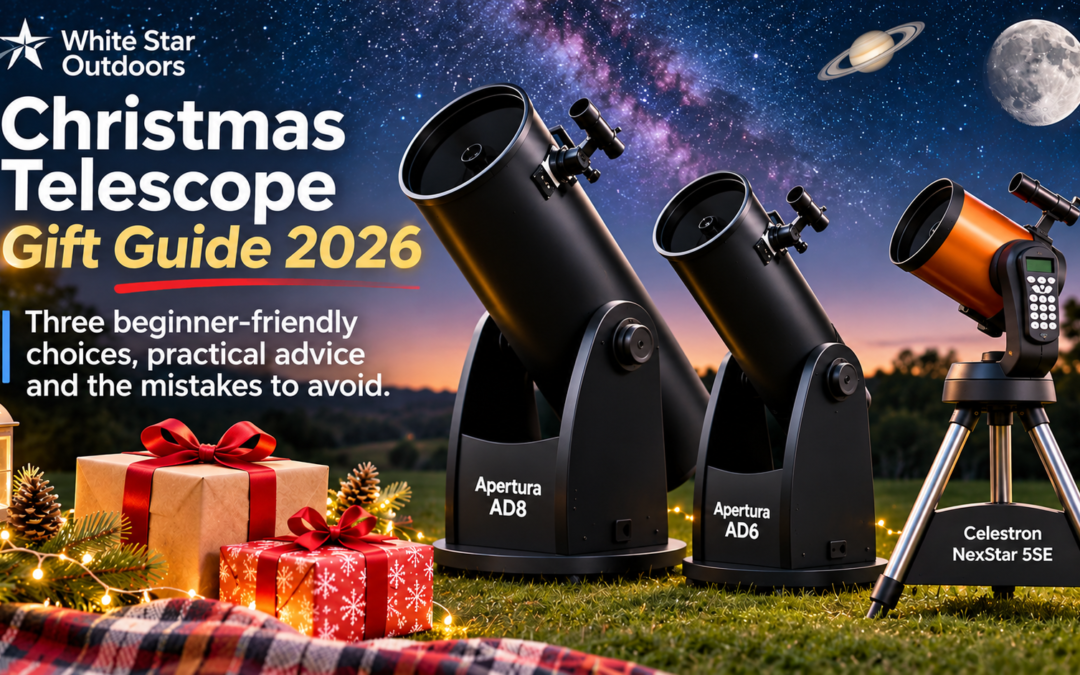
This guide compares three telescopes worth considering for Christmas 2026, explains who each one suits, and helps you avoid spending money on equipment that may end up gathering dust.
The best Christmas telescopes at a glance
| Telescope | Best for | Reference price (USD) |
| Apertura AD8 8-inch Dobsonian | Best overall for visual astronomy | $699.95 |
| Apertura AD6 6-inch Dobsonian | Better value and a somewhat lighter alternative | $499.95 |
| Celestron NexStar 5SE | Beginners who want computerized assistance | $899.00 |
These are reference prices, not guaranteed Christmas offers. Check High Point Scientific for current prices, availability, and delivery information.
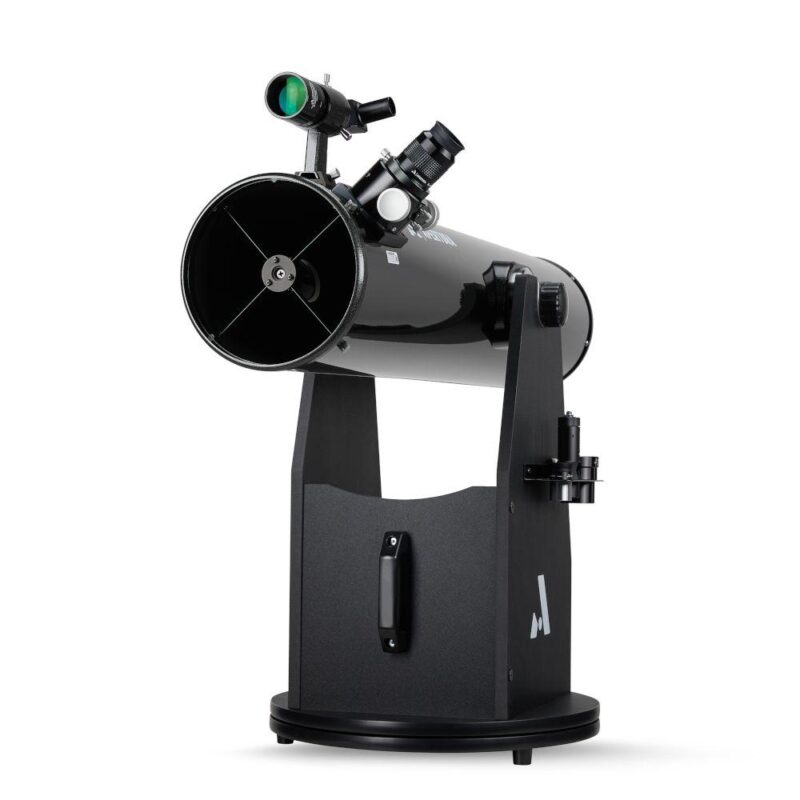
1. Apertura AD8: Our top Christmas telescope recommendation
Best for: Someone who genuinely wants to explore the Moon, planets, star clusters, and brighter deep-sky objects.
If you’re buying for someone who’s been talking about astronomy for months, watching videos about Saturn, or learning the constellations, the Apertura AD8 is our strongest overall recommendation.
Its 8-inch mirror collects considerably more light than smaller beginner telescopes. That matters because astronomy is primarily about gathering light, not advertising enormous magnification.
With suitable conditions and eyepieces, the AD8 can reveal impressive lunar detail, Jupiter’s major cloud belts and four large moons, Saturn’s rings, and a variety of star clusters and nebulae.
It also includes useful accessories, reducing the need to buy additional equipment right away.
Why it’s a good Christmas gift
The AD8 offers enough capability to remain enjoyable long after the excitement of Christmas morning has passed.
It is manually operated, so there is no computerized alignment procedure to learn before starting. However, the owner will need to learn how to locate objects and occasionally adjust the telescope’s mirrors.
What you should know before buying
An 8-inch Dobsonian is substantial equipment. It needs storage space, must be carried outside in separate sections, and works best on reasonably level ground.
It’s not the right gift for someone expecting a tiny telescope they can place on a bookshelf.
Our verdict: For a committed beginner who has the space and enthusiasm, the AD8 is the telescope we’d choose.
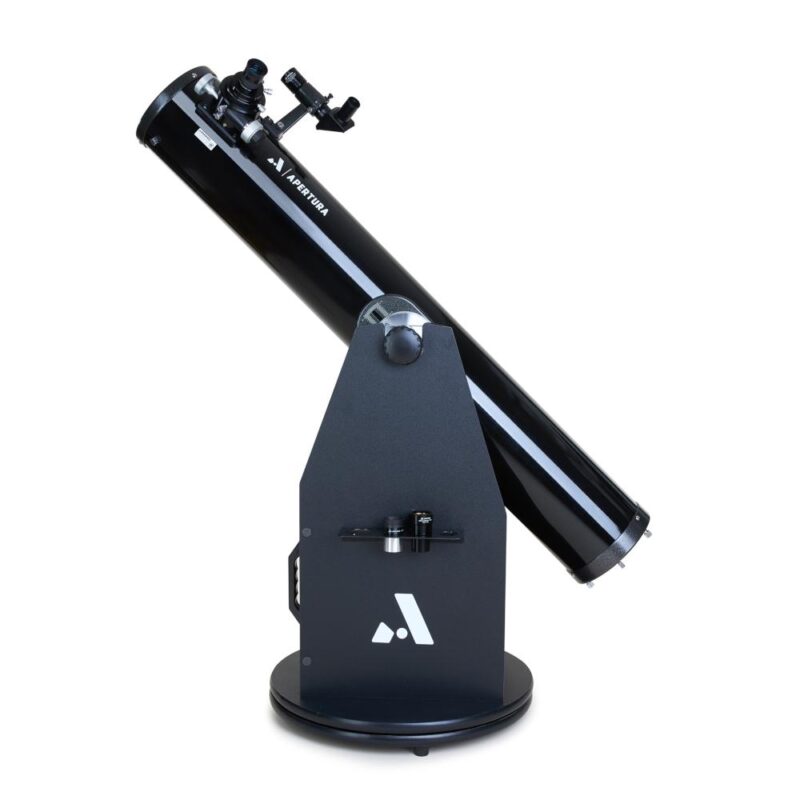
2. Apertura AD6: A sensible alternative that still delivers
Best for: Beginners who want a capable telescope at a lower price.
Not every Christmas gift needs to cost $700.
The Apertura AD6 uses a 6-inch mirror and offers the same basic Dobsonian observing experience as its larger sibling.
It can provide rewarding views of the Moon, Jupiter, Saturn, and many brighter deep-sky objects. It is also somewhat lighter than the AD8, although at approximately 43 pounds in total, it is not a small or particularly lightweight instrument.
Why it’s a good Christmas gift
The AD6 gives a beginner a proper astronomical telescope without requiring the larger AD8 budget.
Its straightforward manual design encourages the owner to become familiar with the night sky rather than relying on electronics to find everything.
What you should know before buying
The AD6 collects less light than the AD8. Under the same observing conditions, the larger telescope has an advantage when viewing faint objects and resolving fine detail.
Nevertheless, a telescope that is easy enough for its owner to set up regularly is more valuable than a larger one that rarely leaves the house.
Our verdict: Choose the AD6 when budget, storage, and handling matter more than maximizing light-gathering power.
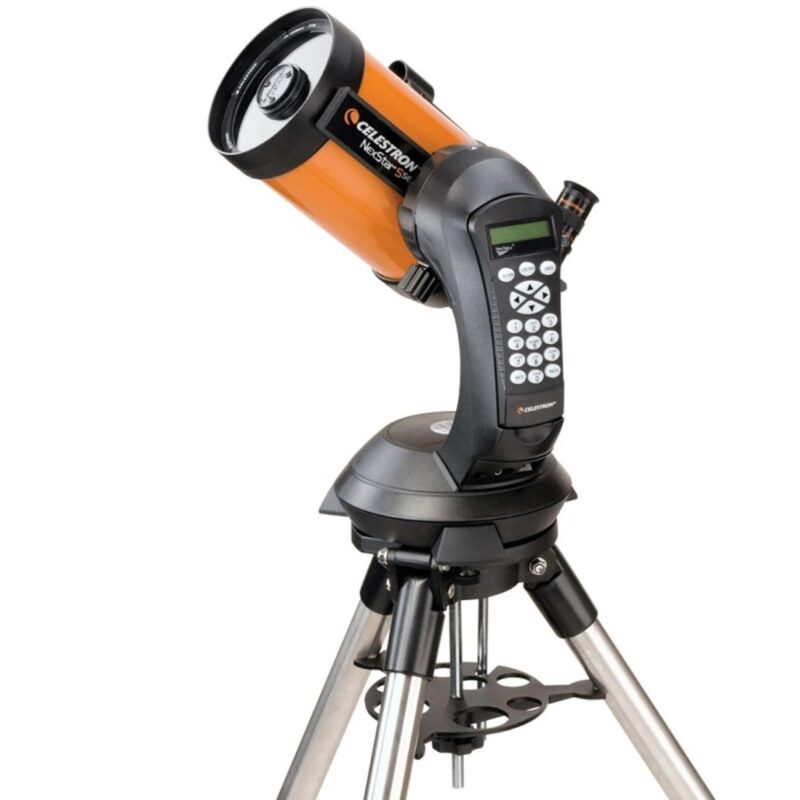
3. Celestron NexStar 5SE: For someone who wants help finding objects
Best for: A beginner attracted to technology and computerized telescope control.
Some people love learning the constellations and finding celestial objects themselves.
Others would rather have a telescope that helps them locate what they want to see.
The Celestron NexStar 5SE is designed for the second group.
It combines a compact 5-inch optical tube with a computerized GoTo mount. Once properly aligned, the system can automatically point the telescope towards selected objects in its database.
Why it’s a good Christmas gift
The 5SE may appeal to someone who enjoys technology, wants a compact optical tube and appreciates assistance finding celestial objects.
It is particularly suitable for observing the Moon, planets, and many brighter objects.
What you should know before buying
Computerized does not mean effortless.
The telescope still needs correct assembly, power, alignment, and a little patience. The recipient must also understand what different objects realistically look like through an eyepiece.
Its 5-inch aperture gathers less light than either Dobsonian recommended above, and the computerized system adds cost.
Our verdict: Choose the NexStar 5SE for someone who specifically values automated object-finding, not simply because it looks more sophisticated.
What about buying a telescope for a child?
A telescope can introduce a child to astronomy, but age and enthusiasm matter.
For younger children, adult supervision and assistance with setup are usually essential. A telescope that requires complicated alignment or frequent adjustments may quickly become frustrating.
Before spending hundreds of dollars, consider whether the child has already shown a genuine interest in the Moon, planets, or the night sky.
An enjoyable first experience with binoculars, a star chart, or a family stargazing evening may be a better introduction than an expensive telescope purchased too early.
For an older child or teenager with a strong interest in astronomy, a Dobsonian can be a rewarding choice, provided an adult can help with its size and setup.
Should you buy binoculars instead?
Sometimes, yes.
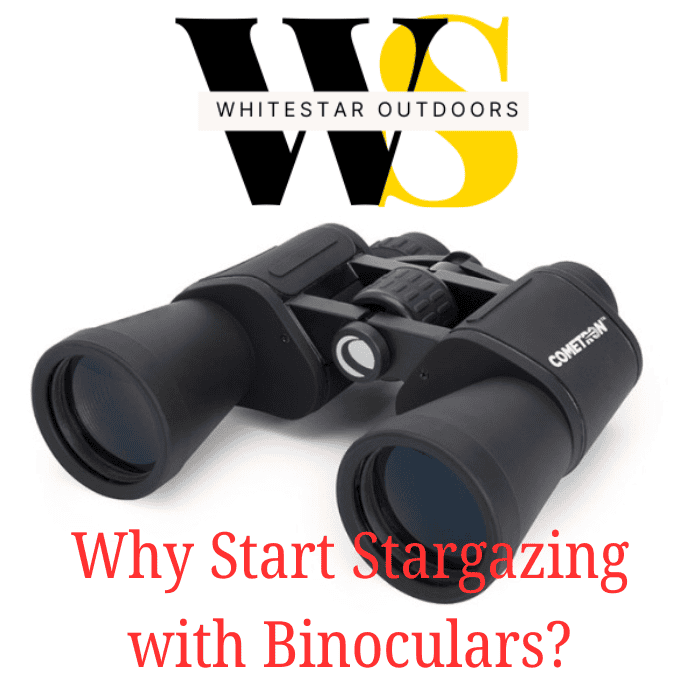
A good pair of 10×50 binoculars can reveal more stars than the naked eye, show wide star fields, help explore the Pleiades and make the Moon more interesting to observe.
They’re portable, versatile, and useful for other outdoor activities.
They won’t show Saturn’s rings or planetary detail like a telescope, but they can be a less intimidating way to discover whether someone enjoys astronomy.
If you’re uncertain about the recipient’s long-term interest, binoculars may be the wiser gift.
Five mistakes to avoid when buying a Christmas telescope
Buying based on magnification alone
A telescope advertising 600× magnification is not necessarily better than one advertising 150×.
High magnification is useful only when the telescope’s optics, aperture, and atmospheric conditions support it.
Expecting photographs through the eyepiece
Colorful photographs of galaxies and nebulae often involve cameras, long exposures, and extensive processing.
Visual observing is different. Many faint objects appear as subtle grey shapes rather than bright, colorful clouds.
That doesn’t make them less fascinating. It simply means the recipient should know what to expect.
Forgetting about size and storage
A Dobsonian may offer excellent value, but it still needs somewhere to live.
Consider whether the recipient has suitable storage and can comfortably move the equipment outside.
Buying unnecessary accessories
A beginner rarely needs a case full of expensive eyepieces, filters, and adapters on Christmas morning.
Start with the telescope and its included equipment. Additional accessories can come later, once the owner understands what they need.
Leaving the purchase until the last minute
Telescopes can be bulky, and popular models may sell out during the holiday season.
Before ordering, confirm availability, shipping deadlines, delivery restrictions, and return conditions directly with the retailer. Do not assume a Christmas delivery date unless the seller confirms it.
What can someone realistically see with their Christmas telescope?
The Moon is usually the easiest and most immediately rewarding target. Its craters, mountain ranges, and shadows can look remarkable through a modest telescope.
Jupiter can show its four largest moons and, under favorable conditions, cloud belts.
Saturn’s rings are another unforgettable sight, although their apparent angle and visibility change over time.
Bright star clusters can be beautiful, especially under darker skies.
Nebulae and galaxies require more realistic expectations. They often appear much fainter than photographs suggest, particularly from light-polluted suburbs.
A beginner doesn’t need to see everything on the first night. Learning where to look and gradually recognizing familiar objects is part of the enjoyment.
Before you wrap the box: A simple Christmas checklist
- Does the recipient genuinely want a telescope?
- Can they safely lift, move, and store it?
- Do they have somewhere suitable to observe?
- Would they prefer manual observing or computerized assistance?
- Have you checked the retailer’s current price, stock, and Christmas delivery arrangements?
- Will someone be available to help with the first setup if needed?
Answering these questions before ordering can prevent an expensive disappointment.
Our final recommendation: Give them a telescope they’ll actually use
If the recipient is serious about starting astronomy, has adequate space, and is comfortable learning to find objects manually, the Apertura AD8 is our top choice.
If you want a less expensive telescope that still provides a rewarding introduction, the Apertura AD6 is an excellent alternative.
And if computerized object-finding is particularly important, the Celestron NexStar 5SE deserves consideration, provided the recipient understands the setup involved.
The most memorable part of a telescope gift isn’t necessarily opening the box.
It’s that first clear evening when someone points it towards the Moon, adjusts the focus, and sees details they’ve never noticed before.
Choose the telescope that makes that experience more likely, not the one with the most impressive advertising.
For more help deciding, read our complete beginner’s telescope buying guide.
Explore beginner telescopes, binoculars, and the best stargazing apps for beginners here:
Disclosure: White Star Outdoors may earn a commission when you purchase through qualifying affiliate links. This does not change the price you pay or our commitment to practical, independent guidance.