Spot a Bright Star in the Sky Tonight
If you are wondering what that bright star in the sky tonight is, the answer is usually Venus, Jupiter, or Sirius, depending on the time of year, the time of night, and where you are viewing from.
In many cases, the object is not actually a star at all. Some of the brightest lights visible in the sky are planets, especially Venus and Jupiter. At other times, the object may be a true star, such as Sirius, one of the brightest visible from Earth.
You step outside on a clear evening and notice a single object shining more brightly than everything around it. It stands out immediately and naturally makes you ask a simple question:
The good news is that this is one of the most common and easiest night-sky questions to begin answering. Once you understand the usual possibilities and learn a few simple clues, it becomes much easier to tell whether you are looking at a planet or a star.
Recognizing what you are seeing can turn a passing moment of curiosity into a deeper interest in stargazing. Let’s look at the most likely explanations.
What Is That Bright Star Tonight In The Sky? (Quick Answer)
– Most likely: **Venus or Jupiter**
– If it shines very steadily, it is probably a **planet**
– If it twinkles strongly, it is likely a **bright star like Sirius**
– If it appears near the horizon at dusk or dawn: often **Venus**
This quick guide helps you identify what you are seeing before looking more closely at each possibility below.
Is Venus the Bright Star You See Tonight?
The object most frequently mistaken for a bright star is Venus.
Venus reflects sunlight extremely efficiently because it has thick clouds. As a result, it can appear dazzlingly bright shortly after sunset or just before sunrise.
For centuries, Venus has been known as the Evening Star or the Morning Star, depending on when it appears in the sky.
Despite the name, Venus is not a star at all. It is a planet orbiting the Sun closer to the Sun than Earth.

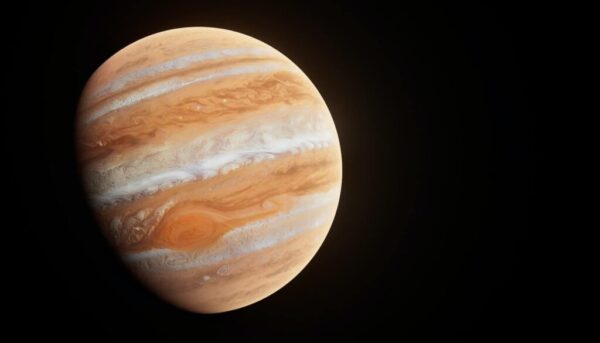
Jupiter is the largest planet in the solar system and the fifth planet from the sun.
Jupiter – The Giant Planet
Jupiter is another extremely bright object in the night sky and is often mistaken for a star because of its steady, non-twinkling light.
Another common candidate for the brightest object in the night sky is Jupiter.
Jupiter is the largest planet in our solar system and reflects a great deal of sunlight. When it rises into the evening sky, it often appears as a brilliant, steady point of light.
Unlike stars, which often appear to twinkle, Jupiter usually shines with a steadier glow. Through binoculars or a small telescope, observers can even see several of Jupiter’s large moons.
Sirius – The Brightest Star in the Night Sky
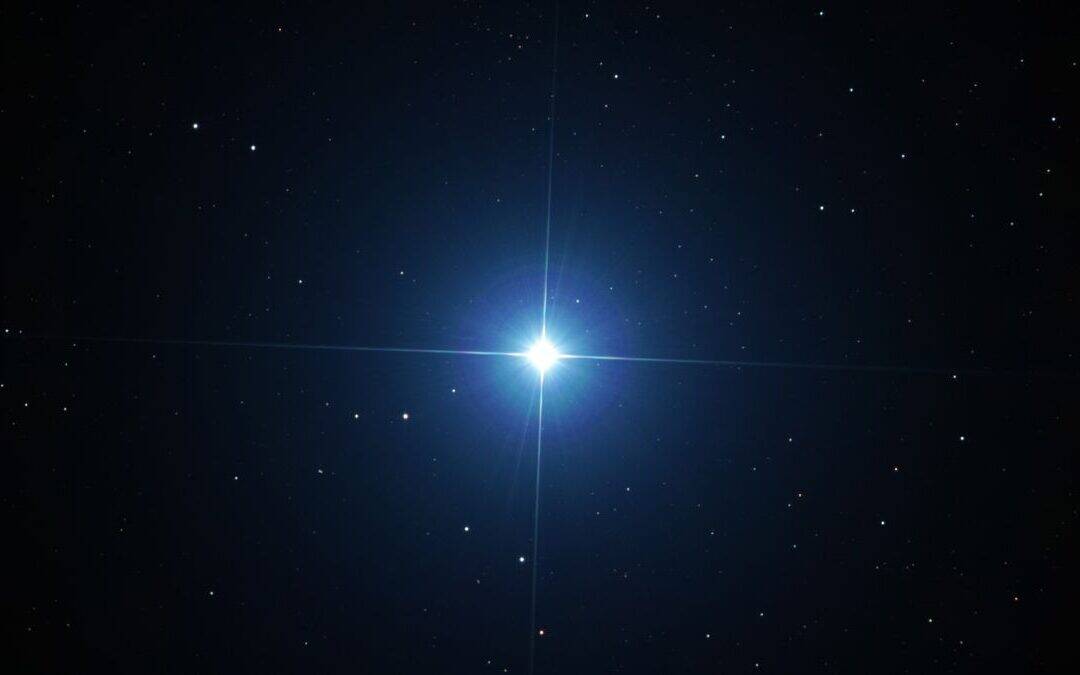
Sirius is the brightest true star visible from Earth and is often mistaken for a planet because of its intense brightness and noticeable twinkling. Sometimes the object you are seeing really is a star.
Sirius, located in the constellation Canis Major, is the brightest star visible from Earth. It shines with a brilliant white-blue light and is often noticeable during the winter months in many parts of the world.
Because Sirius is so bright and sometimes flickers with colourful flashes caused by atmospheric turbulence, it often attracts attention from people unfamiliar with the night sky.

Arcturus is one of the brightest stars in the night sky.
Arcturus and Other Bright Stars
Several other stars can also appear unusually bright depending on the season.
Arcturus, a reddish star visible during spring and summer, often stands out in the sky. Capella, another bright star, dominates winter evenings in the northern hemisphere.
These stars are much farther away than the planets, but still shine strongly enough to be easily visible without any equipment.
Why Bright Objects Stand Out
Thousands of stars fill the night sky, but few appear truly bright.
Brightness depends on several factors, including the object’s distance from Earth, its actual luminosity, and how much sunlight it reflects.
Planets often appear especially bright because they are relatively close to Earth and reflect sunlight directly toward us.
This combination of distance and reflection is what makes Venus and Jupiter so striking when they appear in the sky.
Why Bright Objects Often Cause Confusion
When people notice a bright point of light in the sky, it is easy to assume it must be a star. In reality, several different celestial objects can appear just as bright or even brighter.
Planets such as Venus and Jupiter can shine brilliantly because they reflect sunlight. Some stars, like Sirius or Arcturus, also stand out strongly against the surrounding sky.
For beginner stargazers, learning to recognise these bright objects is one of the first steps toward understanding the night sky. Once you begin identifying them, the sky quickly becomes more familiar and much more rewarding to explore.
Learning to Recognize the Night Sky
Moments of curiosity about bright stars often serve as a starting point for learning more about astronomy.
Recognizing a few bright planets and stars makes the sky easier to understand. Patterns and constellations become familiar, and mysterious objects make sense. When you make it a habit to look for the bright star in the sky tonight, you also begin to notice other fascinating objects and patterns. Understanding what you can see in the night sky tonight makes it much easier to recognise planets, stars, and constellations as they appear. Some nights, a bright planet is visible; on others, a true star such as Sirius or Arcturus commands attention. Tracking these changes is a gateway to a deeper understanding of the sky above.
To take your exploration further, use the following guides to expand your night sky discoveries, and remember that each evening brings a new opportunity to spot a bright star in the sky tonight.
With patience and curiosity, even a simple glance upward can become the start of a lifelong passion for astronomy.

Explore beginner telescopes, binoculars, and the best stargazing apps for beginners here: