
Binoculars for Astronomy
It seems from the moment you begin to take your love of astronomy seriously, the thing that is on your mind is what kind of telescope you will get. And no question that investing in a good telescope can enhance your enjoyment of your new passion for astronomy. However, binoculars for astronomy are a great alternative for stargazing.
But don’t be too hasty to keep up with the hotshots in the astronomy clubs with advanced telescopes. Another option can give you most of the advantages of a telescope, extra flexibility, and reduced cost.
That alternative is a good pair of astronomy binoculars. Mostly, we think of binoculars as the things you use to see at football games. But if you do some homework and have a good grasp of your stargazing objectives, you’ll be fine. The advantages of binoculars for astronomy over an entry-level telescope can be convincing.
* As a rule, they are cheaper. So, you can get a lot of good stargazing at much less investment.
You can always spend more money later, but for now, this may be just the solution for you.
* There are not so many accessories.
Owning and operating a telescope requires a lot of orientation to set it up and use. Beyond that, tuning it for optimal viewing and diagnosing problems can sometimes make the telescope more of a passion than stargazing itself.
* It is much easier to use.
If you have not bought a telescope yet, you may have seen telescope owners going through a laborious setup and breaking down discipline for each use. It is time they stop looking at the stars. The binocular users are happily stargazing as this goes on.
* Binoculars are lightweight and portable.
Unless you have the luxury to set up and operate an observatory from your deck, you will probably travel to perform your viewings.
Binoculars are much more accessible and easier to carry to the country and use while you are there than a cumbersome telescope setup kit.
So give the binocular option some consideration. However, to make the most effective choice, here are a few facts about binoculars for astronomy that will help you evaluate which ones are best for you.
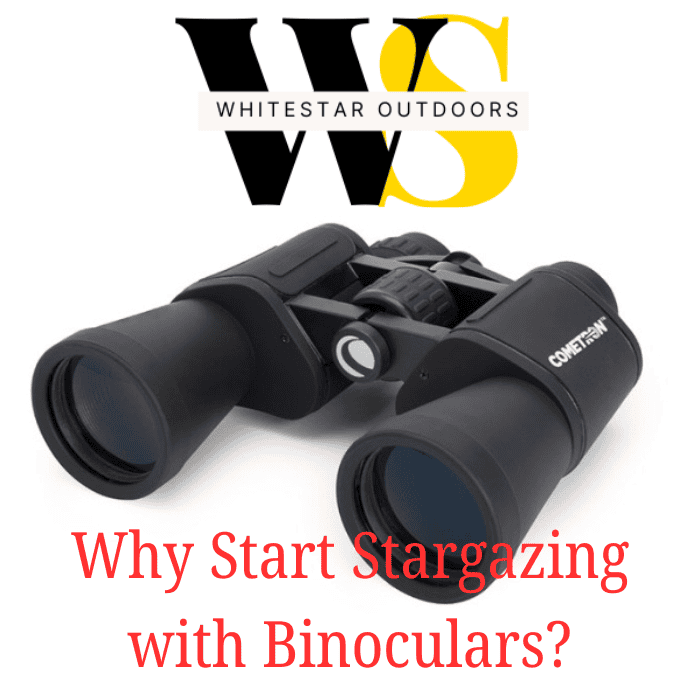
Binoculars have two lens sets: one at the end of the eyepiece and one right next to your eyes. The ones closest to the eye are the ocular lenses, which magnify the image (make it bigger). The ones closest to the sky are called objective lenses; the size of these lenses will determine how much sky you can see at once.

* How to Evaluate Astronomy Binoculars
So anytime you evaluate binoculars, two numbers are associated with the set. So if the binoculars have a rating of 15-40, the ocular lenses magnify by 15x, and the last number is a relative measure of how much of the sky you can see.
The explanation is simple. The higher the second number, the more you can see. The bigger the lens, the lighter it lets in. But be aware that the larger the second number, the heavier and more cumbersome the binoculars will be.
You must balance these two numbers with your budget and what you want the binoculars to do for you. Suppose you decide to go with lower-power binoculars. In that case, you could become frustrated with what you can see, and you may have to take your eyes away from the view to get your orientation and consult the star map more often because your range of vision is limited.
There will also be a temptation to buy a set of binoculars with zoom and other features that let you use them for other purposes, such as hunting, whale watching, or seeing the football game from the top of the grandstand.
While this is a good economy, those functions will get in the way when using binoculars for astronomy. If you consider this purchase an alternative to buying a telescope, we advise buying astronomy-specific binoculars and not taking them to the ball game.