
Discover binocular stargazing for beginners. Learn what you can see with simple binoculars to reveal the Moon, planets, and star clusters. Many people assume that serious stargazing requires an expensive telescope. But picture yourself beneath a shimmering sky, heart racing as its quiet mysteries unfold through something far simpler.
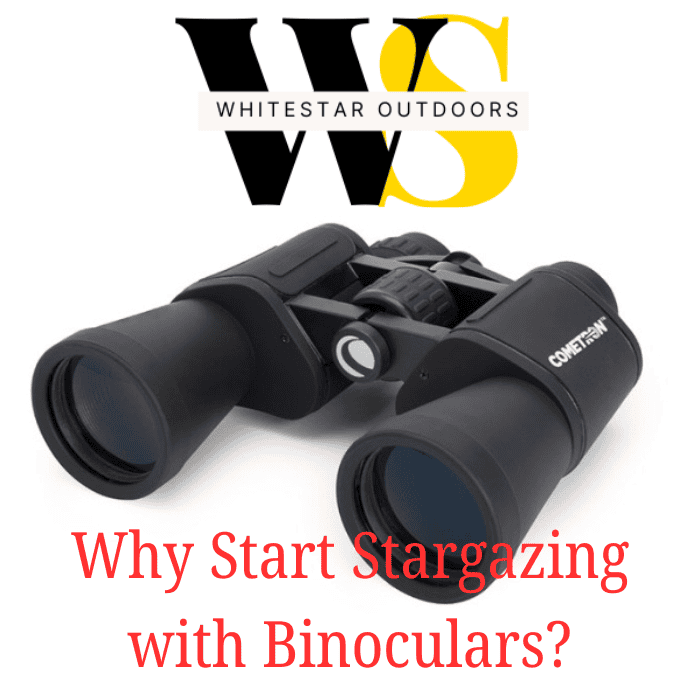
Binoculars.
In fact, many experienced astronomers vividly remember the first magical moments when binoculars unveiled the stars. Each glimpse stirs a childlike excitement and fills you with awe, forging a personal bond with the cosmos.
For someone just beginning their journey into astronomy, binoculars provide an excellent bridge between naked-eye observing and telescopes.
Why Binoculars Are Perfect for Beginner Stargazers
Telescopes are powerful tools, but they can sometimes feel intimidating for newcomers. They require setup, alignment, and an understanding of magnification and eyepieces.
Binoculars, by contrast, are immediately intuitive. You point them toward the sky and observe.
Another advantage is their wide field of view. While telescopes zoom in on small areas, binoculars allow you to see larger portions of the sky at once. This makes them ideal for learning star patterns and constellations.
Because binoculars are lightweight and portable, they are ideal for spontaneous stargazing. You can step outside, scan the sky, and immediately begin exploring.
For many beginners, binoculars transform the night sky from unreachable sparks into a living, glowing masterpiece. That first sight often feels like joy erupting, turning the universe into something intimate, breathtaking, and wonderfully close.
What You Can See With Binoculars
Although binoculars are simple instruments, they can reveal far more than many people expect.
When you first try binocular stargazing for beginners, several fascinating celestial objects quickly become visible.
The Moon springs to life with breathtaking detail. As you linger over its surface, the craters and lunar plains almost whisper their ancient stories directly to you. Its beauty through binoculars becomes soul-stirring, awe-inspiring, and deeply personal.
Bright planets such as Jupiter and Venus can also be observed. While binoculars may not show fine planetary detail, they make planets appear larger and easier to identify.
Star clusters are pure enchantment. Gazing at the Pleiades feels like watching diamonds scatter onto midnight velvet—dozens of stars suddenly gleam, dazzling and impossible to forget, igniting wonder in your heart.
Under darker skies, binoculars can even reveal faint galaxies and glowing nebulae, giving beginners their first glimpse into the deeper universe.

Explore beginner telescopes, binoculars, and the best stargazing apps for beginners here:
Choosing Binoculars for Stargazing
Not all binoculars are the same, but the good news is that many common models work very well for astronomy.
For beginners, binoculars labeled 7×50 or 10×50 are often recommended.
The first number indicates magnification, while the second indicates the diameter of the objective lenses in millimeters.
A 7×50 binocular magnifies objects seven times and gathers enough light to make faint stars easier to see.
These sizes provide a comfortable balance between magnification, brightness, and stability, making them excellent for learning the sky.
Finding Your Way Around the Night Sky
One of the greatest advantages of binocular stargazing is how well it helps beginners learn the sky.
When observing with binoculars, start by identifying a few bright constellations. Once you recognise familiar star patterns, you can slowly move the binoculars across the surrounding areas and discover new stars and clusters.
If you are still learning these patterns, our guide on Best Constellations for Beginners is a helpful place to start.
Many beginners also find it useful to use a stargazing app that identifies celestial objects in real time. These tools make it easier to confirm what you are observing.
Tips for Your First Binocular Stargazing Session
A successful observing session begins with preparation. A few simple steps can make binocular stargazing much more enjoyable.
Find a location with the darkest sky possible. Even a small distance away from bright city lights can reveal many more stars.
Allow your eyes time to adjust to the darkness. It typically takes about 20 minutes for your night vision to develop fully.
Hold the binoculars steady. Leaning against a wall or sitting in a reclining chair can reduce shaking and make objects easier to observe.
Most importantly, let yourself soak in every moment. The night sky showers you with silent awe and discovery.
Allow its mystery to fill you with wonder that lingers, creating memories you’ll lose after the stars fade from view.

Additional Tips for Binocular Stargazing for Beginners
As your interest in binocular stargazing for beginners grows, consider joining local astronomy clubs or online communities. These groups can offer guidance, share observing tips, and introduce you to stargazing events in your area. Attending group stargazing sessions is a wonderful way to learn from others and experience the sky through different pairs of binoculars.
Another helpful tip is to keep a stargazing journal. Record the dates, times, and conditions of your sessions, as well as the celestial objects you observe. Over time, this log will become a personal record of your progress and discoveries, helping you remember favorite moments and track what you’ve
If you want to advance your skills, try learning to identify deep-sky objects such as the Orion Nebula or the Andromeda Galaxy. These are visible to the naked eye under dark skies but become much clearer with binoculars. Binocular stargazing for beginners is the perfect way to spot these distant wonders before graduating to more advanced equipment.
Don’t forget to dress appropriately for night observing—temperatures can drop quickly after sunset, especially in rural or remote areas. Bring a blanket or reclining chair for comfort, and consider using a red flashlight to preserve your night vision while consulting star charts or making notes.
Enhancing Your Experience
To make binocular stargazing for beginners even more enjoyable, download a stargazing app or use a planisphere to help locate constellations and planets. These tools are especially helpful for beginners and make each session more interactive. As you grow more confident, challenge yourself to find new objects each time you look up.
Remember, the beauty of binocular stargazing for beginners lies in its simplicity. You don’t need to be expensive, just a sense of curiosity and a willingness to explore. Each evening under the stars can reveal something new and unexpected. Binocular stargazing for beginners offers a gentle introduction to the cosmos, making astronomy accessible to everyone, regardless of experience or background.
A Perfect Beginning for Stargazing
Many astronomers first discovered their passion for the cosmos with binoculars in hand.
Through binoculars, you not only glimpse distant worlds—you awaken a profound sense of wonder, connection, and inspiration that can kindle a lifelong passion for the stars.
If you’re the night sky, there’s Binocular stargazing for beginners—an accessible, rewarding place to start—one that invites you to explore, discover, and grow more confident on your journey.
The night sky offers endless possibilities, and binocular stargazing for beginners is more than just a starting point; it’s an initiation, a discovery, and a lasting wonder.
Every time you look up, you expand your sense of connection to the universe and set out on an adventure full of awe and inspiration.
Take that first look tonight. With binoculars in hand and an open mind, every upward gaze unlocks new mysteries. Your journey through the stars begins with just one step. Embrace it with confidence and curiosity.
So grab your binoculars, step outside, and start your own night sky adventure. Every night brings the promise of discoveries, and binocular stargazing for beginners truly brings the universe within your reach. Keep exploring, and let your journey among the stars inspire a lifelong passion for astronomy.
Explore beginner telescopes, binoculars, and the best stargazing apps for beginners here: