Looking for the best telescopes for beginners? Discover reliable starter telescopes that are easy to use, stable, and perfect for your first nights of sky exploration.
Choosing the best telescopes for beginners can feel confusing at first. There are dozens of models, technical specifications, and opinions online.
But for someone just starting out, the goal is simple: a telescope that is easy to use, stable, and enjoyable on your very first night under the stars.
If you’re new to astronomy, the right telescope should help you see the Moon, planets, and bright deep-sky objects without frustration.
This guide focuses on reliable beginner telescopes that are widely recommended for their simplicity, quality, and value.
What Makes a Good Beginner Telescope?
The best telescopes for beginners share a few important characteristics:
- Stable mounts that prevent shaking
- Simple controls that are easy to learn
- Enough aperture to gather good light
- Reliable optics that provide clear views
Many beginners make the mistake of chasing magnification. In reality, stability and light gathering are far more important.
If you are still deciding what type of telescope to buy, you may want to read our guide on choosing your first telescope.
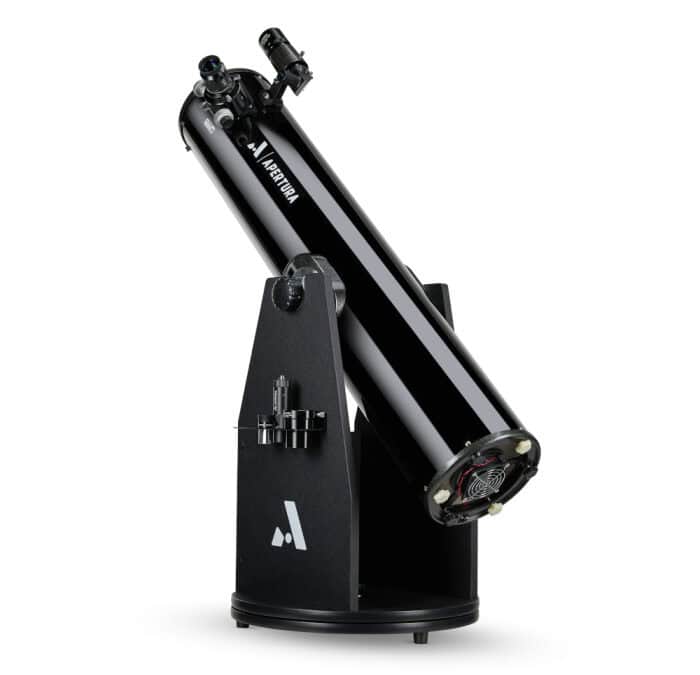
1. Dobsonian Telescopes (Best Overall for Beginners)
Dobsonian telescopes are widely considered the easiest and best telescopes for beginners. They use a simple mount that lets you smoothly point the telescope across the sky.
- Large light-gathering ability
- Excellent value for money
- Very stable base
Because of their simplicity, Dobsonian telescopes are often recommended as the best starting point for learning the night sky.
2. Small Refractor Telescopes
Refractor telescopes use lenses rather than mirrors. They are easy to maintain and provide sharp views of the Moon and planets.
- Low maintenance
- Clear planetary views
- Lightweight and portable
For beginners interested in lunar observing and bright planets, a small refractor can be an excellent starting telescope.
3. Maksutov Telescopes
Maksutov telescopes are compact and well-known for their sharp planetary detail. They are often chosen by beginners who want a smaller telescope that still delivers impressive views.
- Compact design
- Sharp optics
- Portable for travel
The trade-off is a narrower field of view compared to Dobsonian telescopes.
Tips for Choosing the Right Telescope
- Start simple — complicated setups discourage beginners
- Choose a telescope you can easily carry outside
- Focus on stability rather than extreme magnification
- Learn the night sky gradually
If you are completely new to astronomy, it may help to begin with our guide to stargazing for beginners.

What Can You See With a Beginner Telescope?
One of the most exciting parts of choosing your first telescope is realizing just how much is visible from your own backyard.
Even a modest beginner telescope can reveal remarkable sights in the night sky.
Before choosing a telescope, it helps to understand what you can see in the night sky tonight, because many of the most fascinating objects are already visible with the naked eye.
The Moon
The Moon is often the first object beginners observe. With a small telescope, you can clearly see craters, mountains, and the dramatic shadows along the lunar surface.
Each night, the view changes as sunlight moves across the Moon’s terrain.
Planets
Several planets are visible with beginner telescopes. Jupiter’s four largest moons can often be seen lined up beside the planet, and Saturn’s rings are one of the most memorable sights for new stargazers.
Mars and Venus can also show detail depending on their position in the sky.
Star Clusters and Bright Nebulae
Under reasonably dark skies, beginner telescopes can also reveal bright star clusters and a few famous nebulae.
One popular example is the Orion Nebula, a glowing cloud of gas where new stars are forming.
Seeing these objects for the first time is often what turns curiosity into a lifelong interest in astronomy.

A Simple Approach to Your First Telescope
The best telescopes for beginners are those that encourage you to spend more time outside, looking up.
A reliable, easy-to-use telescope will help you discover the Moon’s craters, Saturn’s rings, Jupiter’s moons, and many of the brighter deep-sky objects visible from Earth.
Start simple, learn the sky gradually, and upgrade only when you feel ready.
Some links on this page may be affiliate links. If you choose to purchase through them, it helps support White Star Outdoors at no additional cost to you.

Explore the best telescopes for beginners here: