Best Meteor Showers 2027:
The Best Nights to Watch Shooting Stars
Discover the best meteor showers of 2027, peak viewing dates, Moon conditions, and practical tips for seeing shooting stars without a telescope.
Viewing dates updated: November 2026 | Includes the major meteor showers through December 2027
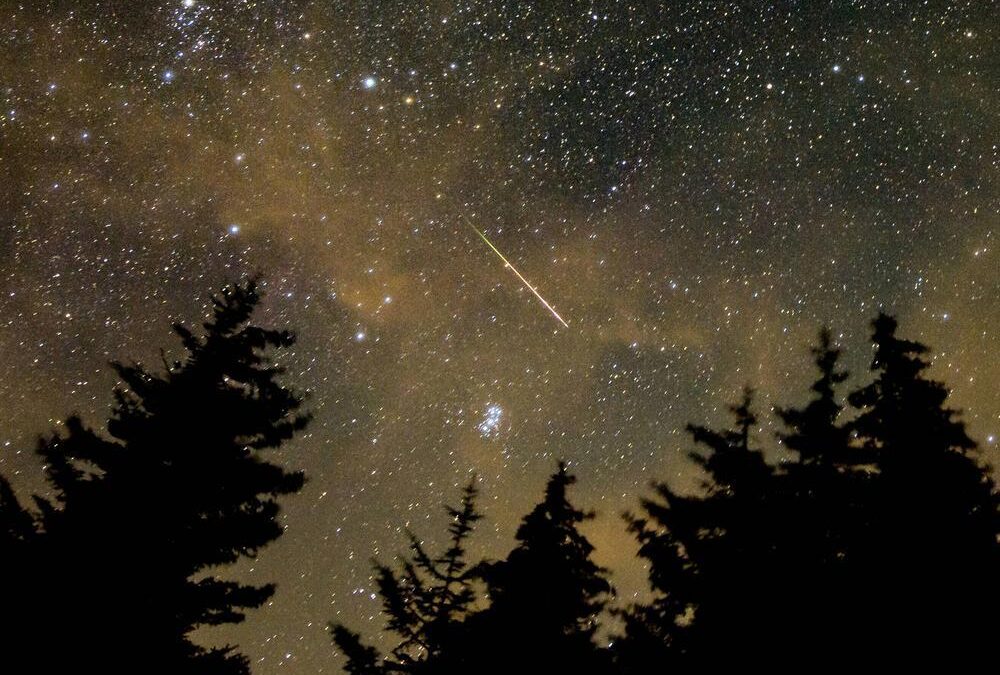
There’s something extraordinary about watching a meteor streak across the night sky.
One moment, you’re looking at familiar stars. The next, a sudden flash of light crosses the darkness and disappears.
You don’t need a telescope. You don’t need binoculars. And you certainly don’t need to understand astronomy to enjoy it.
But you do need to choose your night carefully.
Every year, several meteor showers give us a reason to head outside and look up. Some produce dozens of visible meteors under favorable conditions, while others are much quieter.
The important thing isn’t simply how many meteors a shower can produce. It’s whether the Moon and your surroundings allow you to see them.
Here’s how to choose the best nights and make the most of them.
What is a meteor shower?
A meteor shower happens when Earth passes through a stream of small particles left behind by a comet or, in some cases, an asteroid.
As these particles enter our atmosphere at enormous speeds, they heat the surrounding air and produce the bright streaks we call meteors.
Most of these particles are surprisingly small, often no bigger than grains of sand.
The familiar expression shooting star is misleading. You’re not watching a star fall from the sky.
You’re seeing a tiny piece of space debris produce a brief flash of light high in Earth’s atmosphere.
Meteor showers return around the same time each year because Earth crosses the same debris streams during its journey around the Sun.
That makes them predictable enough to plan an evening around.
The best meteor showers to watch in 2026 and 2027
Not every meteor shower is equally rewarding, and viewing conditions change from year to year.
These are the events I’d recommend beginners pay particular attention to.
Leonids — November 2026
The Leonid meteor shower reached its annual peak around 17–18 November 2026. Although the main viewing opportunity has passed, occasional Leonid meteors may still be visible into early December.
The Leonids originate from debris left by comet 55P/Tempel-Tuttle and are known for their exceptionally fast meteors. Most years produce a modest display, although the shower has occasionally generated spectacular meteor storms.
For beginners, the best approach is to find a dark location, allow your eyes to adjust and watch a broad area of sky without binoculars or a telescope.
Geminids — 13–14 December 2026
Best for: A final meteor-watching opportunity in 2026
The Geminids are among the most dependable annual meteor showers.
They often produce bright meteors, and unlike some showers that are best just before dawn, they can offer worthwhile viewing before midnight.
In 2026, the Geminids peak around 13–14 December.
The good news is that the Moon will be a relatively thin waxing crescent, leaving much of the night reasonably dark.
That makes this an excellent opportunity to take a chair outside, get comfortable and spend an hour watching the sky.
The Geminids are particularly favorable for northern observers, although people in the Southern Hemisphere can also see them, generally at lower rates.
Quadrantids — 3–4 January 2027
Best for: Northern Hemisphere observers
The Quadrantids can produce a strong display, but their peak is unusually brief.
That means timing matters more than with many other showers.
The predicted 2027 peak occurs around 4 January, with favorable Moon conditions. A thin waning crescent should cause little interference.
The main limitation is geography.
The Quadrantids are much better placed for Northern Hemisphere observers and are generally a poor choice for people farther south.
If you’re in North America, Europe or northern Asia, they’re worth checking. The precise peak time also matters: in 2027, the strongest activity is expected to favor Europe and western Asia.

Eta Aquariids
Eta Aquariids — 5–6 May 2027
Best for: Southern Hemisphere observers and early risers
The Eta Aquariids are associated with debris from Halley’s Comet.
They produce fast-moving meteors and are particularly rewarding from southern locations.
In 2027, the peak falls around 5–6 May, close to a new Moon.
That’s excellent news for visibility because there will be very little moonlight to wash out fainter meteors.
The best viewing is generally in the hours before dawn.
For observers in Australia, New Zealand and other southern regions, this is one of the strongest dates to put on the calendar.
Northern Hemisphere observers can also see Eta Aquariid meteors, although the rates are generally lower.
Southern Delta Aquariids — 30–31 July 2027
Best for: A dark-sky winter night in the Southern Hemisphere
The Southern Delta Aquariids are another useful shower for observers south of the equator.
They aren’t usually as spectacular as the strongest Perseid or Geminid displays, but they have a broad period of activity and can reward patient observers.
The 2027 peak falls around 30–31 July, with a thin waning crescent Moon.
That means the sky should be relatively free from moonlight.
If you can get away from streetlights and give your eyes time to adjust, this could be one of the better meteor-watching opportunities of 2027.
Perseids — 12–13 August 2027
Best for: Northern Hemisphere observers, with a warning about moonlight
The Perseids are probably the world’s best-known meteor shower.
They arrive during August, when many Northern Hemisphere families can comfortably spend time outdoors at night.
Under dark skies, they can produce an impressive display.
However, 2027 isn’t an ideal year for the Perseids.
A bright waxing gibbous Moon will be present around the peak, making faint meteors much harder to see while it is above the horizon.
You may still see brighter Perseids, but don’t expect the same display you’d enjoy during a Moon-free year.
This is a good example of why checking the Moon matters more than choosing a shower by reputation alone.

Geminid meteor shower
Geminids — 13–14 December 2027
Best for: Bright meteors, but expect difficult viewing conditions.
The Geminids return every December, but 2027 brings a major disadvantage.
Their peak occurs around the time of a full Moon.
That bright moonlight will hide many of the fainter meteors that would otherwise be visible.
The Geminids remain a strong shower, and some bright meteors may still be seen.
But if you’re planning just one or two dedicated meteor-watching nights in 2027, I’d prioritize the Eta Aquariids or Southern Delta Aquariids, particularly from southern locations.
The two things that decide whether you’ll actually see meteors
A calendar can tell you when a shower is active.
It cannot guarantee you’ll see anything.
Two factors make an enormous difference.
1. How bright is the Moon?
The Moon can be beautiful to observe, but it’s not always your friend when you’re watching meteors.
A bright Moon lights up the sky and makes faint meteors harder to detect.
A new Moon, or a night when the Moon is below the horizon during your observing session, usually provides better conditions.
Before planning your evening, check the Moon phase and when it rises and sets.
You can still see bright meteors when the Moon is present, but you’ll generally see fewer.
A modest meteor shower under a dark sky can be more rewarding than a famous shower under a bright Moon.
2. How dark is your observing location?
Streetlights, illuminated buildings, and the glow from nearby towns can hide faint meteors.
You don’t necessarily need to travel hundreds of kilometers to find a useful observing location.
But getting away from direct lighting can make a noticeable difference.
A quiet rural property, a dark coastal area, or an open park away from strong lights may offer better viewing than a brightly lit suburban backyard.
Choose somewhere safe, accessible and legal to visit after dark.
And remember that clear skies matter too. Even an excellent meteor shower won’t be visible through thick cloud.
How to watch a meteor shower
The best way to watch meteors is surprisingly simple.
Leave the telescope inside.
A telescope shows only a small section of sky, while meteors can appear almost anywhere overhead.
Your eyes are much better suited to the job.
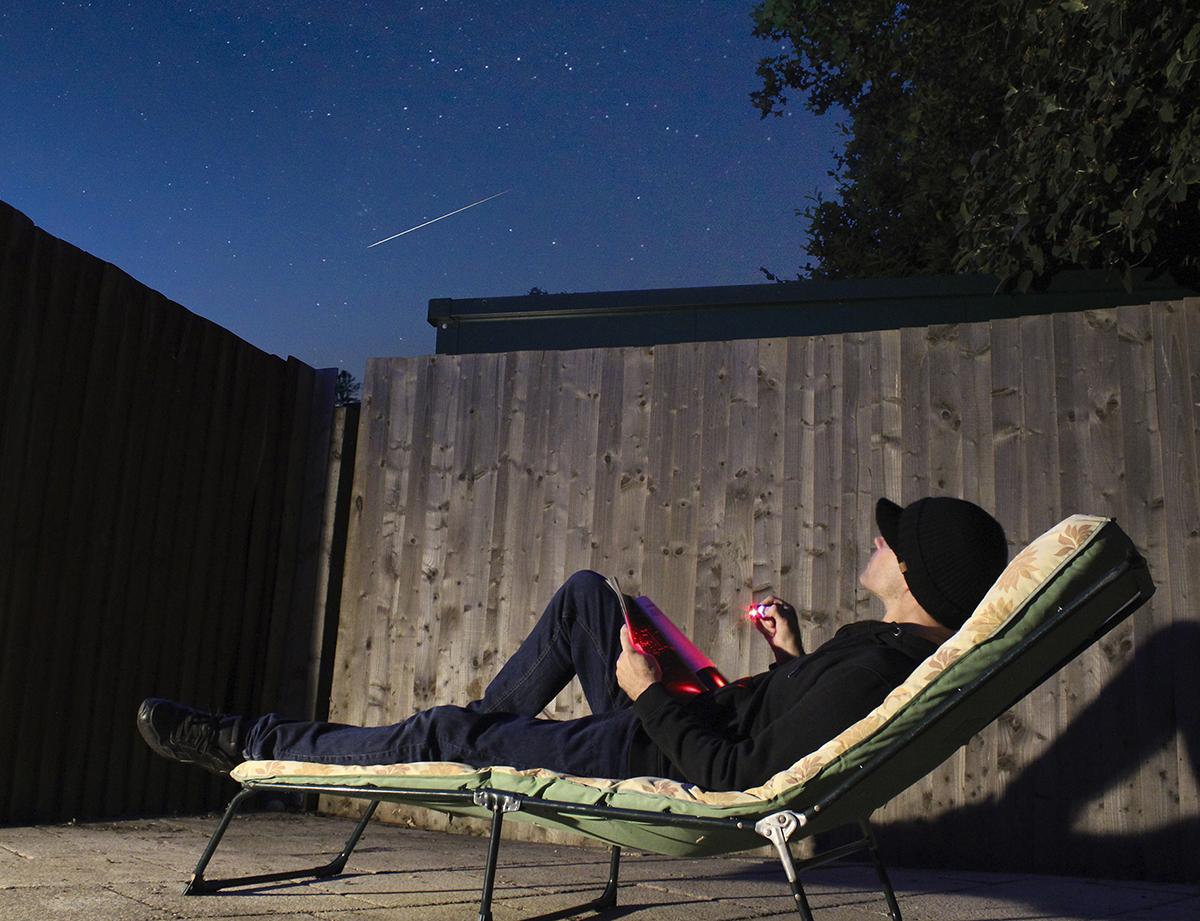
Find a comfortable place with a wide view of the sky. A reclining chair or blanket makes it much easier to watch.
Allow around 20–30 minutes for your eyes to adapt to the darkness.
Avoid looking at bright phone screens, and give yourself at least an hour if conditions allow.
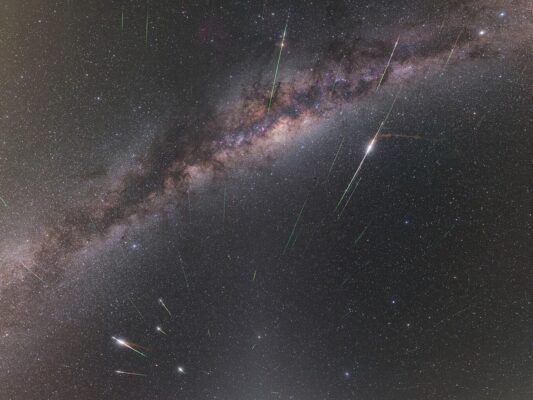
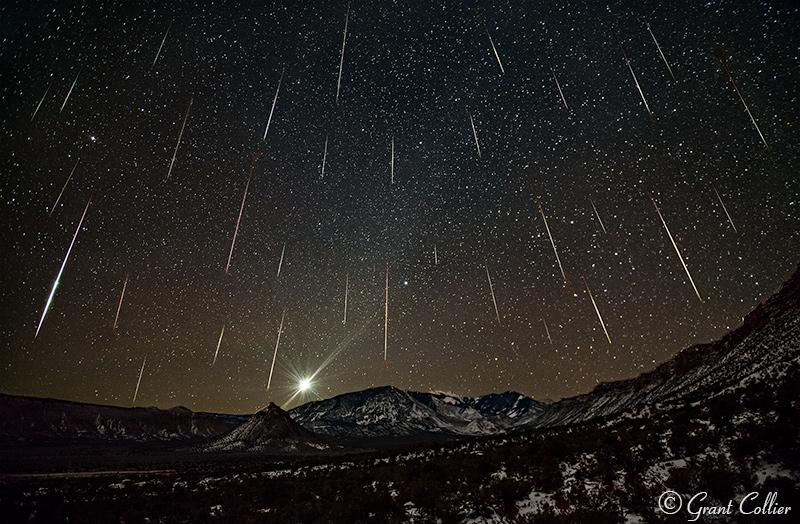
You don’t need to stare at the constellation that gives a meteor shower its name. Meteors can appear across a large area of sky, although their paths will seem to trace back towards a common point.
Dress for the weather, bring something warm to drink, and be patient.
There may be quiet periods followed by several meteors within a short time.
That’s part of the experience.

How many shooting stars should you expect?
You may see impressive numbers quoted for major meteor showers.
Sometimes those figures refer to ideal observing conditions: perfectly dark skies, the shower’s radiant high overhead, and an experienced observer.
Real-world viewing is often quite different.
A suburban observer may see only a handful of meteors during an hour, even when a shower is active.
Someone under a genuinely dark sky may see considerably more.
And from some locations, a shower’s radiant may never rise high enough for a strong display.
Rather than expecting a meteor every minute, treat the evening as an opportunity to spend time beneath the stars.
A single brilliant meteor can make the whole experience worthwhile.
Where to check the latest meteor shower dates
Meteor showers return each year, but their precise peaks, Moon conditions, and best observing times change.
For reliable predictions, I recommend two specialist resources:
A useful calendar showing upcoming showers, peak dates, and Moon conditions.
A detailed annual calendar covering meteor activity, observing conditions, and predicted peak times.
The viewing dates in this White Star Outdoors guide were checked in November 2026 and cover the major opportunities through December 2027. We’ll update this same page as new annual predictions become available, so you can return to one familiar guide rather than searching for a different article each year.
The night sky has more to offer than meteor showers.
A meteor shower is a wonderful reason to head outdoors, but you don’t have to wait for one to enjoy the sky.
On other evenings, you might watch the International Space Station pass overhead. It looks like a bright, steadily moving point of light, and you can predict when it will appear.
The best night to look up isn’t always the night of the biggest meteor shower. It’s the night when the sky is dark, the weather is clear, and you’re willing to spend a little time watching.

“Explore beginner telescopes at High Point Scientific”