
Beginner’s Guide to Messier 42
Simple beginner’s guide to Messier 42. Exploring the Orion Nebula can be a fascinating experience for beginners interested in astronomy.
Exploring the Orion Nebula can be a fascinating experience for beginners interested in astronomy. The Orion Nebula, or Messier 42 or M42, is one of the night sky’s most famous and easily observable nebulae.
Learn about the Orion Nebula:
Before venturing to observe the nebula, familiarize yourself with some basic information. The Orion Nebula is located in the constellation Orion and is visible with the naked eye as a hazy patch of light below Orion’s Belt. It is a stellar nursery where new stars form, approximately 1,344 light-years from Earth.
Choose the right time:
The Orion Nebula is visible throughout the year, but the best time to observe it is in winter (in the northern hemisphere), when Orion is high in the sky. Choose a clear, moonless night for optimal viewing conditions.
Use binoculars or a telescope:
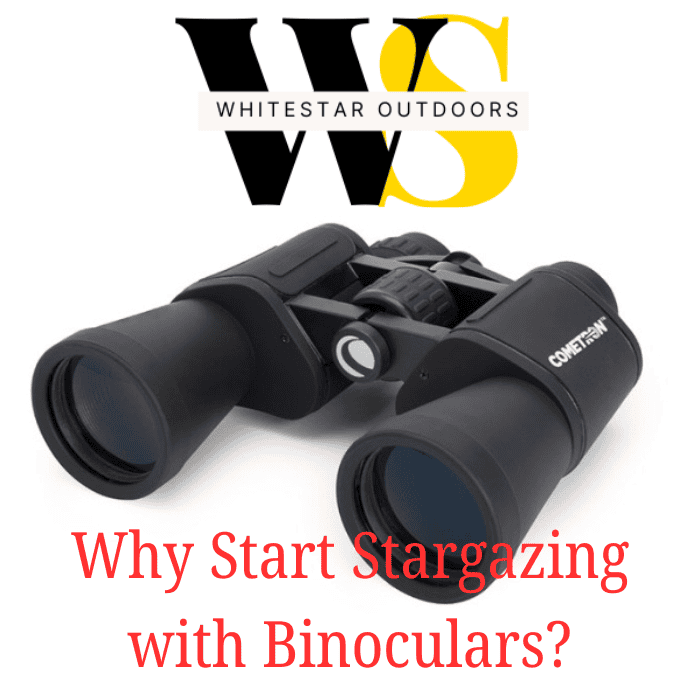
While the Orion Nebula is visible to the naked eye, using binoculars or a telescope will enhance your experience and reveal more detail. A pair of binoculars with good light-gathering capability (e.g., 7×50 or 10×50) is an excellent choice for beginners. If you can access a telescope, even a small one, you can see more intricate structures within the nebula.
Find a Dark Observing Location:
Light pollution can significantly affect your ability to observe faint objects like the Orion Nebula. Find a dark observing site away from city lights for the best views. If that’s impossible, consider visiting a local observatory or a designated stargazing area.

Locate Orion:
Locate the constellation Orion in the night sky. Orion’s Belt, composed of three bright stars in a straight line, is easy to spot. The nebula is located just below the Belt, forming the “sword” hanging from Orion’s “belt.”
Observe the nebula:
Once you’ve located Orion and its Belt, direct your gaze or telescope/binoculars to the “sword” region below. You should see a fuzzy light patch, the Orion Nebula. Take time to observe its shape, size, and any other details you can perceive.
Use appropriate filters:
If you’re using a telescope, consider using a nebula filter to enhance the contrast and visibility of the Orion Nebula. Filters like the UHC (Ultra High Contrast) or OIII (Oxygen III) can help bring out more details.
Take long-exposure astrophotography:
If you’re interested in capturing images of the Orion Nebula, consider long-exposure astrophotography. By attaching a camera to your telescope and taking long exposures, you can capture stunning photos of the nebula’s intricate structures and vibrant colors.

Research Astrophotography Techniques to Get Started.
Astrophotography is a fascinating discipline that involves capturing images of celestial objects and phenomena. Here are some commonly used techniques in astrophotography:
Long Exposure:
Astrophotography often requires long exposure times to capture faint light from distant objects. Using a tripod or a tracking mount, you can keep the camera steady for extended periods, allowing more light to accumulate on the camera sensor.
Tracking Mount:
A tracking mount compensates for the Earth’s rotation, enabling you to capture sharp images of celestial objects without star trails. This device moves the camera at the same rate as the stars, keeping them stationary in the frame.
Star Stacking:
Astrophotographers often take multiple exposures of the same scene to reduce noise and enhance details, and combine them later. This technique, known as star stacking, involves aligning, averaging, or median-blending the images to create a final result with reduced noise and increased signal.
Light Pollution Filters:
Light pollution filters help to minimize the impact of artificial lighting on astrophotographs. They can be attached to the camera lens or mounted on a filter wheel and work by selectively blocking specific wavelengths of light associated with light pollution.
Image Calibration:
Calibrating your astrophotography images is crucial for obtaining accurate results. It involves taking dark frames (captured with the lens covered), bias frames (captured with the shortest possible exposure), and flat frames (captured with an evenly illuminated frame) to correct for sensor noise, lens imperfections, and dust spots.
Autoguiding:
Autoguiding is a technique used to achieve precise tracking during long exposures. It involves using a separate camera and a guide scope, or an off-axis guider, to track a guide star. The autoguiding system continually adjusts the mount’s position based on the guide star’s movement, ensuring accurate tracking and sharp images.
Planetary Imaging:
A technique called “lucky imaging” is often used to capture detailed images of planets, in which a high-speed camera captures numerous short video clips of the Earth. Specialized software is then used to select and stack the sharpest frames from the video to create a single, high-resolution image.
Wide-Field Astrophotography:
Wide-field astrophotography captures expansive views of the night sky, often including landscape elements in the composition. This technique utilizes wide-angle or fisheye lenses to capture a broad field of view, allowing you to capture constellations, the Milky Way, or meteor showers.
These are just a few techniques used in astrophotography. Remember that astrophotography can be a complex and demanding hobby, so it’s essential to understand the equipment, techniques, and post-processing methods involved. Experimentation and practice are crucial to mastering this rewarding art form.
When observing the Orion Nebula or any other astronomical object, patience and dark skies are key. Enjoy exploring the cosmos and marvel at the wonders of the universe.
Reference
https://www.skyatnightmagazine.com/astrophotography/nebulae/the-orion-nebula-m42

Explore beginner telescopes and binoculars here: