
Learn how to find constellations and navigate the night sky with confidence. This beginner stargazing tips guide offers practical stargazing tips, explanations of helpful astronomy apps, and proven strategies to make your first nights under the stars enjoyable and rewarding.
“You step outside on a clear night, look up, and immediately feel lost. The stars are beautiful, but they all look the same. The problem isn’t your telescope. The problem is that you don’t yet have a map.”
One of the most common experiences among beginner stargazers is also one of the most frustrating.
You step outside on a clear night. The stars are shining. Perhaps you’ve just bought your first telescope, downloaded a stargazing app, or decided that tonight is finally the night you are going to learn something about astronomy.
You look up.
And immediately realize you have no idea where to start.
The sky appears vast and crowded. Thousands of stars are scattered overhead. Every direction looks much the same. You may have heard people talk about Orion, the Southern Cross, Scorpius, or the Big Dipper, but identifying them among hundreds of other stars can feel almost impossible.
Equipment Isn’t the Answer (Yet)
Most beginners assume they have a telescope problem.
But the real issue isn’t with the telescope at all—it’s finding your way in the sky.
After years of helping newcomers get started in astronomy, I have noticed that many people make the same mistake. They focus on equipment before they learn the sky itself. They spend weeks comparing telescopes, eyepieces, and accessories, yet still feel lost when they step outside at night.
Recognizing this makes learning the sky much easier: once you identify a few celestial landmarks, the rest begins to come into focus.

Explore beginner telescopes, binoculars, and the best stargazing apps for beginners here:
Constellations as Landmarks
These constellations are the main tools for navigating the night sky.
If you were visiting a city for the first time, you would not attempt to memorize every street on the first day. You would begin by identifying a few major landmarks. A train station. A bridge. A well-known building. Once you knew where those landmarks were located, the rest of the city would gradually begin to make sense.
In other words, constellations play the role of landmarks in astronomy.
Constellations provide reference points that organize the vast, overwhelming sky and guide your navigation.
This is why experienced stargazers often seem to know exactly where to look. They are not memorizing thousands of individual stars. Instead, they recognize a small number of familiar patterns and use those patterns to navigate to everything else.
Once you understand this concept, astronomy becomes much less overwhelming.
I still remember how surprising this realization was when I first began learning about the night sky.
Like many beginners, I assumed experienced astronomers instantly recognized every object overhead. In reality, most use a few well-known constellations as starting points.
The Southern Cross is a perfect example for observers in Australia.
Even people with little interest in astronomy can often recognize its distinctive shape. Once you learn to find it consistently, it becomes more than just a familiar pattern. It becomes a reliable reference point. From there, you can determine direction, identify neighboring star fields, and gradually build a mental map of the southern sky.
Orion: A Universal Reference
This principle isn’t limited to the Southern Cross; it applies equally well to Orion.
Perhaps no constellation demonstrates this better. Orion is often one of the first constellations beginners learn because it stands out so clearly. The three bright stars that form Orion’s Belt create a pattern easy to recognize even from suburban areas.
What makes Orion particularly useful is not simply that it is easy to find. It helps you find other things.
Suddenly, the sky feels connected rather than random.
This realization marks a turning point for many beginners.
Orientation: The Turning Point
At first, the night sky appears chaotic. Stars seem scattered without order or structure.
Then one evening, you recognize a familiar constellation.
A few nights later, you identify it again without assistance.
Soon, you begin noticing other patterns nearby.
Without realizing it, you are developing one of the most important skills in amateur astronomy: orientation.
Mastering orientation changes everything about stargazing for the better.
The telescope becomes easier to use.
Star charts become easier to understand.
Astronomy apps become more useful because they reinforce knowledge rather than replace it.
Perhaps most importantly, your confidence begins to grow.
Using Technology and Apps
Applications such as Stellarium Mobile, SkySafari, and Sky Guide can identify constellations almost instantly. They are remarkable tools and can dramatically shorten the learning curve.
Yet, even with these tools, learning the sky on your own remains invaluable.
The goal is not merely to point a phone upward and receive an answer.
The goal is to step outside, look up, and confidently identify constellations to orient yourself.
That moment eventually arrives for most stargazers.
One evening, you look toward the horizon and immediately recognize Orion. You spot Scorpius climbing into view. You notice the Southern Cross without needing an app to confirm it.
The sky that once seemed unfamiliar suddenly feels like an old friend.
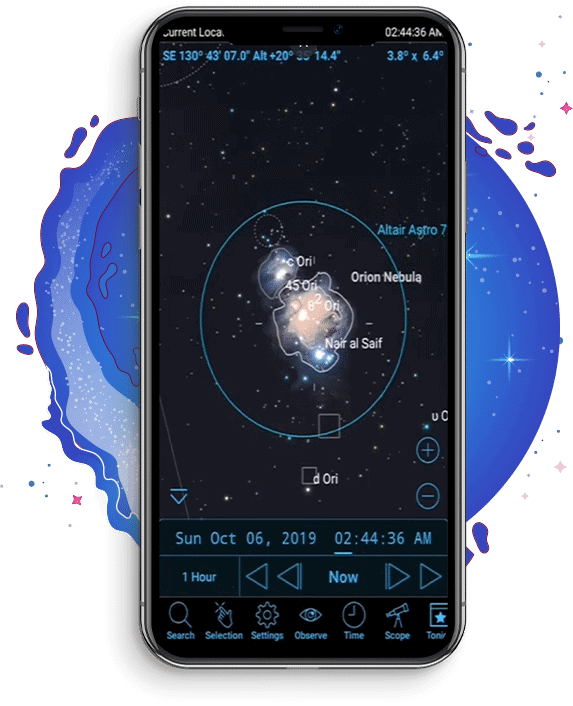
What Each App Does
**Stellarium Mobile**: A planetarium app that displays a realistic night sky on your device, showing stars, constellations, planets, and more. By pointing your phone at the sky, you can instantly identify celestial objects in real time. It also provides detailed information and lets you simulate the sky from any location and time.
**SkySafari**: SkySafari offers interactive star maps, thousands of object descriptions, and the ability to use your phone’s sensors to identify what’s overhead. It can control compatible telescopes and simulate celestial events, making it a comprehensive tool for both beginners and advanced users.
**Sky Guide**: Sky Guide is known for its intuitive interface and beautiful visuals. Point your device at the sky to identify stars, planets, and satellites. It works offline, notifies you of upcoming astronomical events, and offers visual and audio tours to enhance your learning.
Of course, technology can support your journey.
The True Beginning of Astronomy
Many people believe astronomy starts with buying a telescope.
In my experience, astronomy begins much earlier than that.
It begins with learning to look up.
Conclusion: Start Small, Build Confidence
In summary, constellation navigation is accessible to anyone with curiosity and time to observe.
Learn one constellation.
Then learn another.
Don’t try to master the entire sky in a weekend.
Allow your understanding to grow naturally.
Key takeaway: Familiarity with a few constellations makes navigating the night sky easier.
And that is often the moment when a casual interest in astronomy becomes a lifelong passion.
Additional Beginner Stargazing Tips
Building Confidence in Constellation Finding
**Practice with Star Charts**: Printed or digital star charts are excellent for learning the night sky. Spend a few minutes before heading out to study the major constellations visible that night. Hold the chart up and match it to the sky once outside.
**Use the “Star Hopping” Method**: Instead of trying to find a constellation all at once, start with a bright star you already know and “hop” from one star to the next, following the pattern shown on your chart or app. This step-by-step approach makes complex shapes easier to recognize.
**Pick One Constellation Each Night**: Focus on learning just one new constellation per observing session. Revisit it on subsequent nights until you can spot it instantly. Gradually, your mental map of the sky will expand without feeling overwhelming.
**Observe from Different Locations**: Try observing from several spots in your area. Different horizons, levels of light pollution, and vantage points can make certain constellations easier or harder to find, helping you learn to adapt and recognize patterns under changing conditions.
**Start with Binoculars**: Before investing in a telescope, try using binoculars. They are more affordable, easier to use, and excellent for viewing larger star clusters and the Moon.
**Use Red Light at Night**: Preserve your night vision by using a red flashlight. White light can make it harder to see faint stars after your eyes have adjusted to the dark.
**Check the Moon Phase**: A full moon can outshine fainter stars and deep-sky objects. For the best constellation viewing, try stargazing during a new moon or when the moon is below the horizon.
**Be Patient with the Weather**: Some nights will be cloudy or hazy. Use these times to study star charts, read astronomy books, or plan your next observing session.
**Join a Local Astronomy Club**: Many clubs host public stargazing nights and offer guidance to beginners. Connecting with other enthusiasts can accelerate your learning and make stargazing more social and enjoyable.
**Record Your Observations**: Keep a simple log of what you see each night—the constellations, planets, or notable stars you identify. Over time, this will help you track your progress and deepen your appreciation of the sky.
With these tips and the foundational approach described above, your journey into stargazing will be more enjoyable and rewarding.
Final Thoughts
Stargazing is a journey that combines curiosity, patience, and a willingness to learn. By starting with the basics—identifying constellations, understanding the sky’s patterns, and building your confidence step by step—you set yourself up for a lifetime of discovery. The night sky is vast, but with each session, it becomes a little more familiar and a lot more inspiring. Whether you pursue astronomy as a hobby or simply pause to look up now and then, remember that every observer started as a beginner. Your adventure under the stars has only just begun.

For more expert advice and information