6-inch vs. 8-inch Dobsonian Telescope: First Telescope.
Compare what you can see, portability, weight, and price to choose the right one
Buying your first serious telescope is exciting, but choosing between a 6-inch and an 8-inch Dobsonian can leave you wondering whether spending more money will genuinely improve your experience.
Both sizes are capable astronomical instruments. They offer substantial light-gathering ability, straightforward manual controls, and stable mounts without the complexity of computerized tracking systems.
The 8-inch telescope has a clear optical advantage. Its larger mirror collects approximately 78% more light than a 6-inch mirror, making some faint objects easier to see. It also has greater potential to resolve fine detail on the Moon and planets when viewing conditions are favorable.
But there is another side to the decision.
The 8-inch is heavier, bulkier, and more expensive. If carrying your telescope outside becomes a chore, that extra aperture may not be worth the inconvenience.
A telescope that stays in the garage shows you nothing.
So which should a beginner choose?
The answer depends on what you want to observe, where you will use your telescope, how comfortable you are moving it, and what you can reasonably afford.
Let’s examine the differences so you can choose a telescope that suits your circumstances.
1. What Is a Dobsonian Telescope?
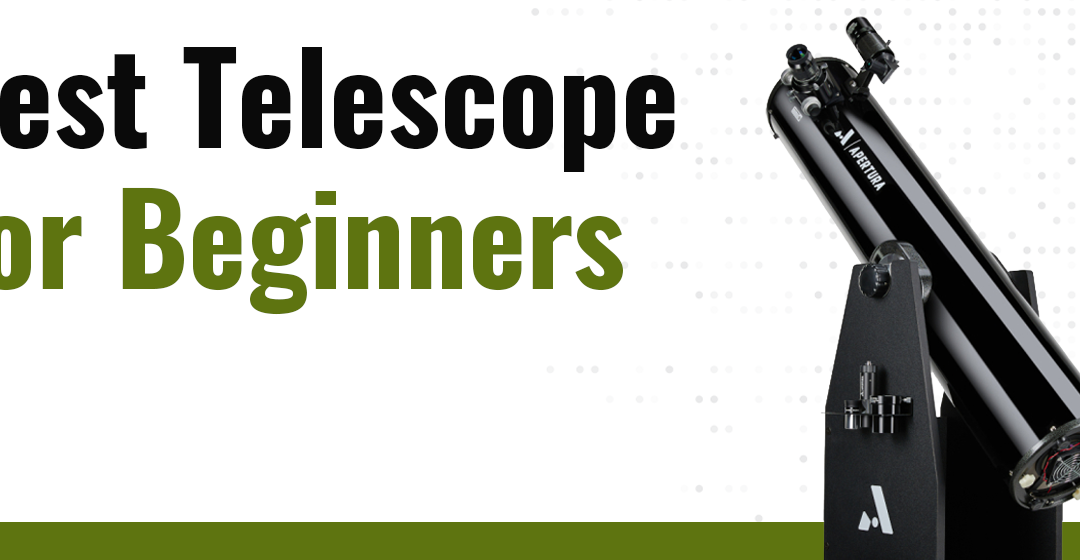
A Dobsonian telescope is usually a Newtonian reflector mounted on a simple, sturdy base that lets the optical tube move up and down and side to side.
Unlike a telescope on a lightweight tripod, a traditional Dobsonian uses a broad, low-mounted base. This helps reduce vibration when focusing or adjusting the view.
Most beginner Dobsonians are operated manually. You locate an object using a finder, look through the eyepiece, and gently move the telescope to follow it as Earth rotates.
That simplicity is one of their greatest strengths. More of your money goes towards the optical system and a stable mount rather than motors, electronics, or computerized controls.
However, Dobsonians are not automatically lightweight or compact. A full-size model generally consists of a substantial optical tube and a separate base, both of which require space for storage and transport.
If you’re mainly interested in observing the Moon, planets, star clusters, nebulae, and galaxies, a Dobsonian is well worth considering.
2. 6-Inch vs 8-Inch Dobsonian: The Main Differences
To make the comparison practical, we’ll use two telescopes from the same range: the Apertura AD6 and Apertura AD8.
| Feature |
Apertura AD6 |
Apertura AD8 |
| Mirror diameter |
6 inches (152.4 mm) |
8 inches (203.2 mm) |
| Focal length |
1,200 mm |
1,200 mm |
| Focal ratio |
f/7.9 |
f/5.9 |
| Approximate total weight |
19.5 kg (42.9 lb) |
23.7 kg (52.2 lb) |
| Mount |
Manual Dobsonian |
Manual Dobsonian |
| Listed US price, October 2026 |
US$499.95 |
US$699.95 |
Both telescopes have the same focal length, but their different mirror diameters produce different focal ratios.
The AD8 also includes a more extensive accessory package, which we’ll discuss later.
The key point is that these aren’t simply two identical telescopes with different-sized mirrors. Their weight, accessories, and handling characteristics also affect the ownership experience.
Prices are in US dollars and may change.
3. Portability: The Difference You Notice
Before Looking Through the Eyepiece
Optical performance matters, but so does the effort it takes to use your telescope.
Consider a simple situation.
You have finished dinner, the sky has cleared, and Jupiter is visible above the neighboring houses. You have perhaps 45 minutes available before heading inside.
Would you feel comfortable carrying your telescope outside, setting it up and bringing it back afterward?
This question deserves as much attention as mirror size.
Moving a 6-Inch Dobsonian
The Apertura AD6 weighs about 19.5 kg in total, but you don’t normally need to lift the entire telescope as one unit.
Its optical tube weighs approximately 8.3 kg, while its base weighs approximately 11.2 kg.
Separating the two components makes the telescope easier to transport than its total weight might suggest.
Nevertheless, the base is bulky, and the tube is relatively long. Carrying the telescope through narrow doorways, down stairs or across uneven ground still requires care.
The AD6 is manageable for many adults, but it is not a small grab-and-go instrument like compact binoculars or a tabletop telescope.
Moving an 8-Inch Dobsonian
The Apertura AD8 weighs approximately 23.7 kg (52.2 lb) in total.
That is roughly 4.2 kg heavier than the AD6, and the larger tube and base can feel noticeably bulkier.
Although the extra weight may not sound substantial on paper, size and shape matter when carrying equipment.
A long optical tube can be awkward to maneuver around furniture, doorframes or vehicles. The base may also take up considerable room in a car boot.
If your observing location is a few steps from where you store the telescope, this may be a minor concern.
If you must carry it downstairs, transport it to a remote location or regularly lift it into a vehicle, the difference deserves careful consideration.
A useful buying exercise is to measure your storage space, doorways and vehicle before purchasing either telescope.
If possible, visit an astronomy club or retailer and see a full-size Dobsonian in person. Handling one tells you much more than a photograph can.
The 8-inch telescope is optically more capable, but that advantage matters only if you’re willing and able to take it outside.
4. Light-Gathering Power:
What Does the Extra Two Inches Really Mean?
A telescope’s aperture is the diameter of its main light-gathering mirror or lens.
This matters because the light arriving from distant objects can be extraordinarily faint. A larger mirror gathers more of that light and concentrates it into an image your eye can examine.
The difference between a 6-inch and an 8-inch mirror is greater than the numbers might suggest.
Light-gathering area increases with the square of the aperture.
8² ÷ 6² = 64 ÷ 36 = 1.78
In other words, an 8-inch mirror has about 78% more collecting area than a 6-inch mirror, before accounting for central obstructions, mirror coatings, and other optical losses.
That extra light can make a meaningful difference when observing faint objects.
For example, a globular star cluster that appears as a soft glow in a smaller telescope may begin to reveal more individual stars through the larger instrument. Some galaxies and nebulae can also appear more prominent, particularly under dark skies.
But it is important to understand what the extra aperture does not do.
It does not turn faint galaxies into the bright, colorful objects seen in long-exposure photographs. Most galaxies will still appear greyish, and many will remain faint.
The advantage is real, but expectations need to remain realistic.
Does an 8-Inch Telescope Show 78% More Detail?
Not in the simple way that statement might suggest.
Light gathering and resolution are related but different optical properties.
A larger mirror can theoretically distinguish finer details. Under ideal conditions, an 8-inch aperture has approximately 25% better angular resolution than a 6-inch aperture.
However, atmospheric turbulence often limits what you can actually see. On an unsteady night, both telescopes may produce similarly soft planetary images because the atmosphere is disturbing the incoming light.
The larger telescope has greater potential, but conditions determine how much of that potential you can use.
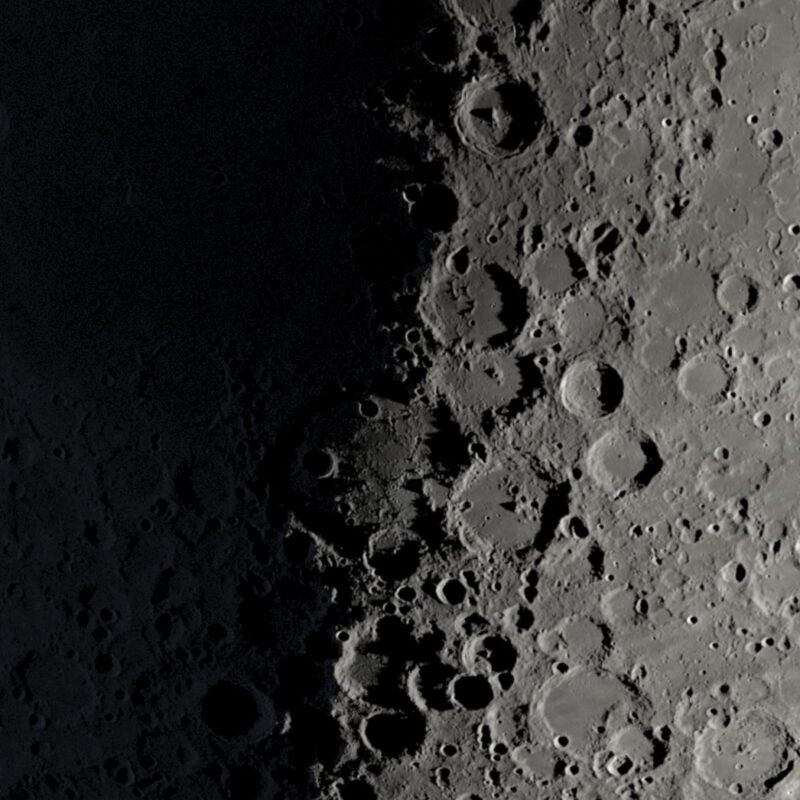
Moon craters and rugged lunar terrain along the terminator seen in a detailed lunar photograph
5. What Can You Actually See Through Each Telescope?
For most beginners, this is the most important question.
The good news is that a 6-inch Dobsonian is already a capable astronomical instrument. You do not need an 8-inch telescope to enjoy serious observations.
Both sizes can provide rewarding views of the Moon, planets and many deep-sky objects.
The Moon
The Moon is an outstanding target through either telescope.
A 6-inch Dobsonian can reveal numerous craters, mountain ranges, broad lava plains and the intricate boundary between lunar day and night known as the terminator.
An 8-inch telescope can potentially reveal smaller features and finer surface detail when the atmosphere is steady.
However, the Moon is bright, so extra light-gathering ability isn’t the main advantage here. Resolution, optical quality, appropriate magnification, and atmospheric conditions matter more.
For a beginner, the difference may be less dramatic than expected.
Jupiter
Both telescopes can show Jupiter as a disc rather than a point of light, along with its four large Galilean moons when they are suitably positioned.
Under favorable conditions, a 6-inch Dobsonian can reveal Jupiter’s main cloud belts and sometimes additional atmospheric detail.
An 8-inch telescope offers more potential for observing subtle cloud structures, festoons and other features. But these details depend heavily on seeing conditions, experience, and the planet’s position above the horizon.
A larger mirror cannot compensate for Jupiter being low in turbulent air.
Saturn
Saturn is one of the most memorable objects a beginner can observe.
Both a 6-inch and an 8-inch Dobsonian can reveal its rings when they are sufficiently open and viewing conditions permit.
An 8-inch telescope may show finer ring and planetary detail, but the appearance changes with the orientation of Saturn’s rings, which varies over the years.
If the rings are nearly edge-on, they can be difficult to see clearly through either instrument.
The important message is that Saturn does not require an 8-inch telescope to be worth observing.
Star Clusters
Open star clusters, such as the Pleiades, can be attractive through both telescopes. However, their wide apparent size may make binoculars or low-power instruments better suited to viewing the entire cluster.
Globular clusters are where the larger aperture becomes particularly interesting.
A 6-inch telescope can show bright globular clusters as concentrated patches of light, sometimes resolving stars around their edges.
An 8-inch telescope can reveal more individual stars in favorable clusters, especially from a dark observing location.
The difference becomes more noticeable as you gain experience identifying faint stars against the background glow.
Nebulae
Bright nebulae such as the Orion Nebula are rewarding targets for both sizes.
A 6-inch telescope can show its luminous central region, surrounding nebulosity and the Trapezium star group under suitable conditions.
An 8-inch telescope can make faint extensions easier to detect and may reveal more structure, particularly under dark skies.
Most of the nebulosity will still appear grey or faintly greenish to many observers rather than displaying the vivid colors seen in astrophotography.
Galaxies
Galaxies are among the most challenging objects for beginners because their light is spread over a relatively large area.
You can observe the Andromeda Galaxy through both telescopes, but its appearance depends strongly on sky darkness and field of view.
Under suburban skies, you may see mainly its bright central region. Under darker conditions, more of its extended glow becomes apparent.
An 8-inch telescope can reveal fainter galaxies and subtle brightness differences within brighter ones.
However, traveling to a genuinely dark observing location can sometimes improve the view more dramatically than increasing aperture from six to eight inches.
6. Does the 8-Inch Telescope Require More Setup?
Both the AD6 and AD8 use manual Dobsonian mounts.
Once you’ve assembled the base, routine setup is straightforward: position the base, place the optical tube in its supports, check the finder, and begin observing.
Neither requires polar alignment or a computerized star-alignment procedure.
Both Newtonian reflectors may need occasional collimation, which means adjusting the mirrors so they are correctly aligned.
The AD6’s longer focal ratio of f/7.9 is generally more forgiving of small alignment errors than the AD8’s f/5.9 optical system.
This does not mean the AD8 is difficult to maintain. It simply means careful collimation becomes more important as focal ratios get shorter.
Both telescopes also benefit from time to reach outdoor temperature, particularly when moved from a warm house into cold night air.
The AD8 has a larger mirror and includes a cooling fan, which can help the mirror reach ambient temperature faster.
The practical difference is that the AD8 may require a little more prep, but neither telescope is especially complicated once you understand the basics.
7. What About Magnification?
A common beginner assumption is that the larger telescope must always provide more magnification.
In reality, magnification depends on the telescope’s focal length and the eyepiece being used.
Both the AD6 and AD8 have a 1,200 mm focal length.
With a 25 mm eyepiece, either telescope produces:
1,200 ÷ 25 = 48× magnification.
With a 10 mm eyepiece, either produces 120×.
So the larger telescope does not automatically magnify an object more simply because it has a bigger mirror.
The 8-inch aperture gathers more light and offers higher theoretical resolving power. This can allow useful views at higher magnifications when the atmosphere is steady, and the telescope is properly adjusted.
But very high magnification is not always desirable.
For faint galaxies and nebulae, a moderate or low magnification may produce a more satisfying view. For planets, atmospheric conditions often determine the practical limit.
Do not choose a telescope based on a large magnification number printed on the packaging.
Choose a telescope based on aperture, optical quality, mount stability, and how comfortably you can use it.
8. The Accessories Included With Each Telescope
This is one area where comparing only mirror size and price can be misleading.
The Apertura AD6 and AD8 have different accessory packages.
The AD6 includes a 6×30 right-angle finder, 25 mm and 9 mm Plössl eyepieces, and a dual-speed focuser.
The AD8 includes an 8×50 right-angle finder, a 30 mm wide-field eyepiece, a 9 mm Plössl eyepiece, a dual-speed focuser, a cooling fan, a laser collimator and a Moon filter.
The AD8’s larger finder can help locate fainter reference stars, while its wide-field eyepiece provides a useful starting point for finding objects.
The supplied laser collimator is another practical addition, although beginners should learn how to verify that the tool itself is properly aligned.
The AD6 still provides the essentials needed to begin observing, and its included eyepieces cover useful low- and higher-power viewing.
Consider what you actually need rather than assuming a larger accessory bundle automatically makes a telescope better.
For many beginners, the best early investment is learning to use the supplied equipment well before purchasing additional eyepieces or filters.
9. Is the 8-Inch Worth the Extra Money?
At the prices checked in October 2026, the Apertura AD6 is listed at US$499.95 and the AD8 at US$699.95.
That makes the AD8 approximately US$200 more expensive, or around 40% more than the AD6.
For that additional cost, you receive a larger mirror with substantially greater light-gathering ability and a more extensive accessory package.
If your budget comfortably allows it, you have suitable storage space, and you expect to use the telescope regularly, the AD8 can represent excellent long-term value.
It has enough aperture to remain useful as your observing skills develop.
However, spending more is not always the best decision.
The AD6 can already reveal lunar detail, planetary features, star clusters, and many bright deep-sky objects.
A beginner who chooses the AD6 and uses it regularly may develop stronger observing skills than someone who buys a larger telescope but finds it inconvenient to move.
It is also worth keeping some money available for practical observing needs, such as a comfortable adjustable chair, a red flashlight, or occasional travel to darker skies.
The right telescope should fit your life and your budget.
10. Which Size Is Better for Suburban Stargazing?
Light pollution is a major consideration for many beginners.
From a suburban backyard, the Moon and bright planets remain worthwhile targets because they are relatively bright.
Both 6-inch and 8-inch Dobsonians can perform well on these objects.
The larger aperture still collects more light, but it also collects light from the brightened sky background. Increasing aperture does not eliminate light pollution.
For faint galaxies and nebulae, a darker observing location can be extremely valuable.
If most of your observing will take place beneath streetlights and suburban skyglow, don’t expect an 8-inch telescope to reproduce the dramatic deep-sky images shown in advertisements.
Instead, focus on targets suited to your conditions.
Begin with the Moon, Jupiter, Saturn when visible, bright double stars, and prominent star clusters.
As your confidence grows, explore fainter objects and consider visiting a dark-sky location.
11. The Decision: Which Dobsonian Would I Choose?
There is no universal winner, but there is a sensible way to decide.
If I were helping someone choose their first Dobsonian, I would start with where they intend to use it and how often they expect to move it.
For someone with limited storage, a tighter budget, or a need to carry equipment regularly, the 6-inch makes a great deal of sense. It can already show remarkable lunar and planetary detail, along with many deep-sky objects.
For someone with a convenient observing area, enough storage space, and a particular interest in faint star clusters, nebulae, and galaxies, the 8-inch offers a worthwhile optical advantage.
I wouldn’t automatically recommend the larger telescope just because it gathers more light.
A 6-inch telescope that gets used regularly is a better purchase than an 8-inch that rarely leaves its storage space.
Choose a 6-Inch Dobsonian If:
-
- Your budget is more comfortable with the lower price.
- You expect to carry the telescope frequently.
- You have limited storage or vehicle space.
- You want a capable instrument without committing to a larger setup.
- You are mainly interested in the Moon, planets, and brighter deep-sky objects.
Consider an 8-Inch Dobsonian If:
- Your budget comfortably accommodates the extra cost.
- You have a convenient place to store and use it.
- You want more light-gathering ability for faint objects.
- You plan to explore star clusters, nebulae, and galaxies regularly.
- You are comfortable carrying the optical tube and base separately.
Neither choice should be regarded as a temporary or inadequate beginner telescope.
Both can provide years of worthwhile observing.
12. Comparing the Apertura AD6 and AD8
 Apertura AD6 — A Practical 6-Inch Option
Its 152.4 mm mirror, 1,200 mm focal length, stable Dobsonian base, and included eyepieces make it suitable for a wide range of visual observing.
It is not a compact travel telescope, but its two-part design makes it practical for many backyard observers.
 Apertura AD8 — More Light for Deep-Sky Exploration
Its larger aperture is particularly valuable for exploring faint deep-sky objects, while the included accessories provide a useful starting package.
The trade-off is a heavier, bulkier telescope and a higher purchase price.
Neither recommendation is based on a claimed personal hands-on test of these particular models. The comparison uses published specifications, optical principles, and practical ownership considerations.
13. Final Thoughts: The Best Telescope Is the One You’ll Use
An 8-inch Dobsonian is optically more capable than a comparable 6-inch model. It gathers more light and can resolve finer detail under favorable conditions.
That advantage is worth paying for when your observing interests, budget and circumstances support it.
But you should never dismiss a 6-inch Dobsonian as a compromise that will quickly become inadequate.
It can reveal extraordinary detail on the Moon, show the rings of Saturn, display Jupiter’s moons and introduce you to a wide variety of deep-sky objects.
What matters most is developing the habit of going outside, learning the sky and spending time at the eyepiece.
Before buying, ask yourself one final question:
Which telescope would I be happiest taking outside on an ordinary clear evening?
Your answer may be more useful than any specification sheet.
Explore beginner telescopes,binoculars and best stargazing apps for beginners here:
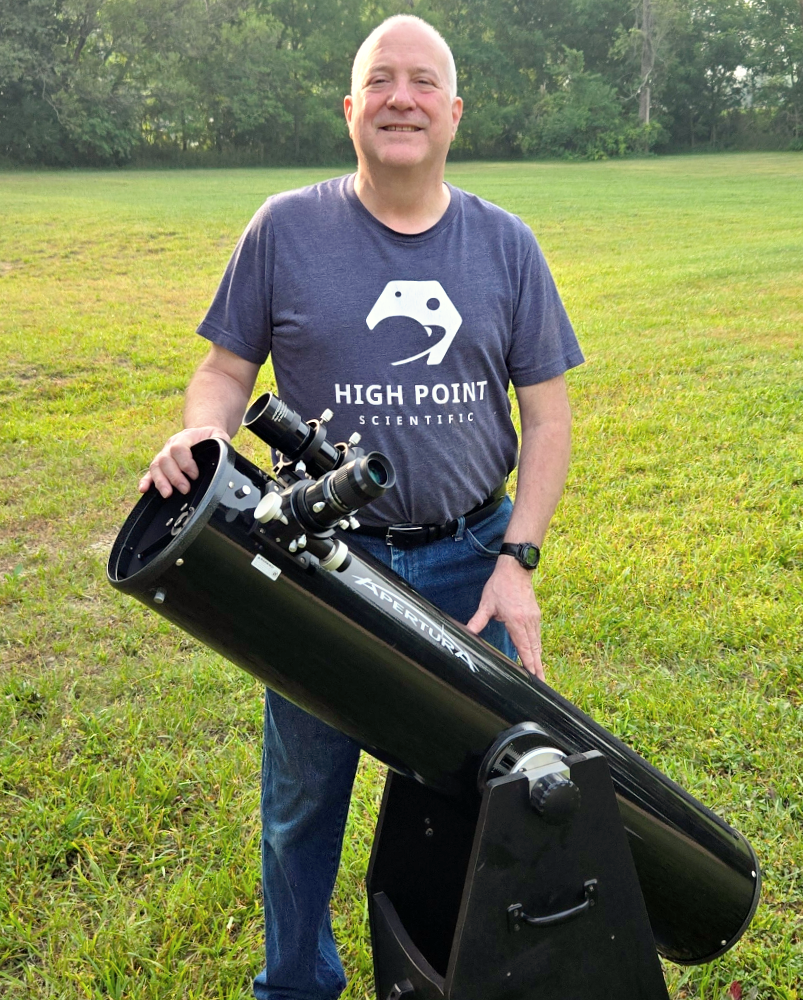 An Expert’s Perspective: Patrick Sutton
50+ years of astronomy experience
“Of all the different telescope designs I’ve owned and used, the greatest variety has been Dobsonian telescopes. Solid tubes, truss tubes, single stalk ultra lights, and off-axis Chiefspieglers. The Apertura AD8 Dobsonian is by far the most user-friendly with its intentional design and quality-construction. Additionally, its outstanding light gathering power opens the doors to countless sights of star clusters, bright nebulae and galaxies, the planets, and so much more. My kids and I have enjoyed countless nights of enjoyment out under the stars with our AD8, and even my 9-year-old daughter can use the telescope with ease.”
Affiliate Disclosure
White Star Outdoors may earn a commission when you purchase through qualifying retailer links on this page, at no additional cost to you. This does not affect the price you pay. We aim to help you understand the differences before deciding whether either telescope is right for you.